Orthognathic Surgery Implants are the small, load-bearing components that help surgeons stabilize repositioned jaws. These typically include titanium or resorbable plates and screws, alongside custom fixation systems. Their quality matters in the operating room: a plate must match the planned bone position, and screws must provide dependable fixation without obstructing the surgical field.
Demand is shaped by more than product innovation. The World Health Organization’s Global Oral Health Status Report (2022) estimates that oral diseases affect nearly 3.5 billion people worldwide. This figure describes broad oral-health needs, not the number of patients requiring jaw surgery. The distinction matters. Likewise, Grand View Research valued the global dental implants market at approximately US$5.9 billion in 2023, but that market chiefly covers tooth-replacement implants—not orthognathic fixation hardware. It should not be treated as a direct measure of this supplier segment.
This guide examines leading suppliers through practical criteria: product range, material options, custom-planning capabilities, clinical support, and geographic availability. It also considers traceable documentation and the strength of publicly available evidence, rather than relying on promotional claims alone. A polished catalogue is not proof of clinical superiority. Comparisons can remain imperfect, because companies disclose different levels of product and performance data. That limitation deserves attention. Readers should verify device specifications, indications, and local availability with qualified clinical teams before making purchasing decisions.
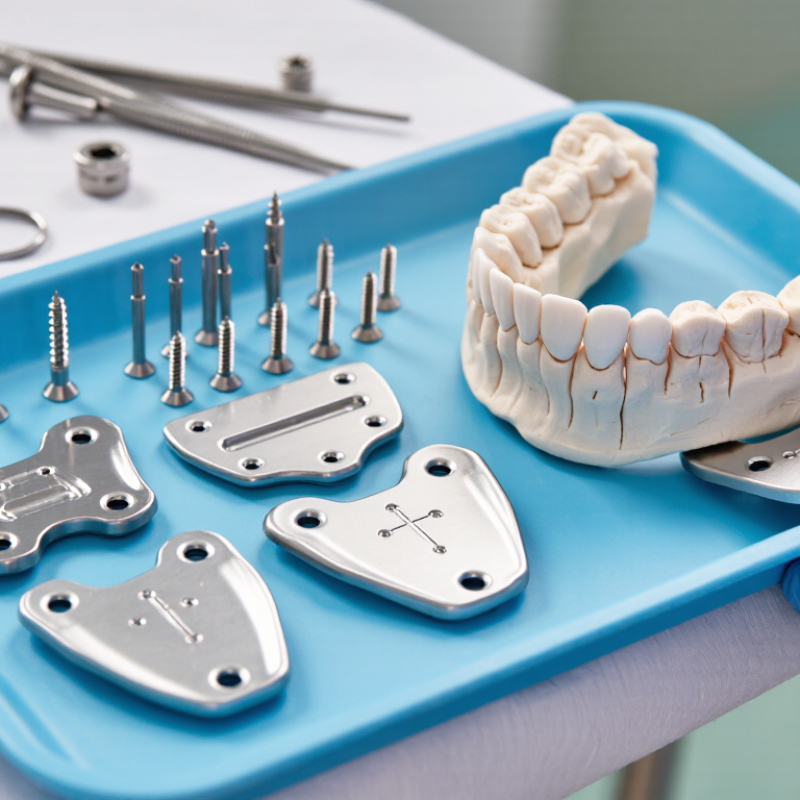
Orthognathic surgery corrects jaw position by cutting and repositioning bone, often in procedures such as Le Fort I osteotomy or bilateral sagittal split osteotomy. Implants usually mean small plates and screws that hold the repositioned bone during healing. They are fixed along the jaw’s contours, often near the cheekbone or lower jaw, to stabilize the segments. The surgeon selects their size and placement based on the bone, bite, and planned movement.
Titanium fixation is common because it is strong and generally well tolerated. As a material benchmark, ISO 5832-3:2021 specifies a minimum tensile strength of 860 MPa for wrought titanium-6 aluminium-4 vanadium alloy used in surgical implants. That figure describes a material test, not a guarantee of a patient’s result. The fit is not the whole story. Surgeons also consider screw position, bone quality, nerve pathways, and whether the hardware may cause irritation. AO Surgery Reference describes fixation as part of stabilizing osteotomized jaw segments; the precise approach varies by procedure and patient. A plate can look tidy on an image, yet healing still depends on biology, careful planning, and follow-up. ISO data and surgical references inform decisions, but they cannot replace clinical judgment.
| Implant or Product Category | Common Materials | Typical Configuration | How It Is Used | Key Selection Considerations |
|---|---|---|---|---|
| Miniplates and screws | Titanium or titanium alloy | Low-profile plates secured with small-diameter bone screws; plate shapes and screw sizes vary by system. | Provide rigid internal fixation to stabilize repositioned jaw segments after procedures such as mandibular osteotomy or Le Fort osteotomy. | Surgeons consider anatomy, bone thickness, planned fixation points, plate profile, screw length, and compatibility within the selected system. |
| Specialized orthognathic plates | Usually titanium or titanium alloy | Pre-contoured or procedure-specific designs, including plates intended for common osteotomy patterns. | Help secure bone segments in the planned position while reducing the need to bend a plate during surgery. | Design and fit should match the osteotomy, patient anatomy, and surgical plan. Available shapes and configurations differ among manufacturers. |
| Patient-specific fixation plates | Typically titanium or titanium alloy | Custom-designed from patient imaging and a virtual surgical plan; produced for an individual case. | Can support planned bone positioning and fixation in selected complex or highly customized procedures. | Require appropriate imaging, planning, design review, manufacturing, and coordination with the surgical team. |
| Resorbable fixation systems | Biodegradable polymers, commonly based on PLA, PLLA, or related copolymers | Resorbable plates and screws supplied in sizes and shapes specific to the system. | Provide temporary fixation and gradually break down in the body; used in selected cases where a permanent metal implant is not preferred. | Resorption time, mechanical strength, material characteristics, patient age, and the required stability period are important considerations. |
| Bone graft fixation components | Usually titanium; resorbable options may be available | Small plates, screws, or related fixation pieces selected for the graft and operative site. | Secure bone grafts or support associated reconstruction when grafting is part of the treatment plan. | Choice depends on graft location, bone quality, required stability, and the overall reconstruction plan. |
| Planning and instrumentation support | Not an implant; may include surgical guides or dedicated instruments | Case-specific guides, templates, or instruments may be used alongside fixation implants. | Can help transfer a digital surgical plan to the operating room and assist with positioning or placement. | Planning tools do not replace clinical judgment; their use depends on the procedure, workflow, and available system. |
Important: Product availability, materials, dimensions, and indications vary by supplier and jurisdiction. Implant selection and use should follow the device instructions for use and the treating surgeon’s clinical judgment.
Small plates and screws hold repositioned bone segments steady during healing. Surgeons place them along the jaw’s contours.
Titanium is widely used because it is strong and generally well tolerated. Material strength alone cannot predict an individual result.
Options include titanium plates and screws, resorbable systems, patient-specific plates, and distraction devices. Each suits different needs.
Resorbable systems gradually break down and may avoid later removal. Their strength and breakdown time vary. No option is perfect.
It gradually separates bone segments so new bone can form in the gap. It is used in selected cases, not every procedure.
Review material grades, dimensions, intended use, traceability, sterility details, and shelf-life labels. Ask for evidence, not just polished brochures.
Confirm they are designed to work together. Check whether sizing tools or surgical guides are available when needed.
No. Bone quality, nerve pathways, healing, and follow-up also matter. A tidy scan is only part of the picture.
Orthognathic Surgery Implants are medical devices used to stabilize the bones of the jaw after corrective surgery. Common options include plates, screws, and other fixation components, which may differ in shape, size, material, and intended use. The appropriate implant configuration depends on the surgical plan, the patient’s anatomy, and the need for secure support as the bone heals.
Suppliers serve hospitals and surgical teams through product selection, technical information, training resources, and distribution to different regions. Comparing suppliers involves considering product range, material and design options, quality systems, clinical support, delivery reliability, and availability. Regulatory requirements and product approvals vary by region, so healthcare providers should confirm that implants meet applicable local standards and are available for their intended clinical use. Together, these considerations help teams assess options and support informed decisions for corrective jaw surgery.

 Moventra Medical