2026 Top Maxillofacial Plating Systems Suppliers?

Time:2026-10-17 Author:Aria
0%

The 2026 market for Maxillofacial Plating Systems is becoming more demanding. Hospitals now assess more than product price and catalogue size. They examine fixation stability, anatomical coverage, titanium quality, sterilization support, surgical handling, and long-term clinical evidence.

Grand View Research identifies cranio-maxillofacial devices as a growing medical technology segment through 2030. Its analysis highlights trauma reconstruction, aging populations, and improved surgical techniques as important growth factors. Fortune Business Insights also reports rising demand for facial fracture fixation and reconstructive implants. However, market growth does not automatically prove supplier quality. That distinction matters.

“Restoration of occlusion is the key to successful treatment of mandibular fractures,” emphasized maxillofacial surgeon Edward Ellis III. This principle remains practical. A plate may look technically advanced, yet fail to serve the patient’s anatomy or surgical plan. Small screw heads, difficult contouring, or poor instrument balance can change the operating experience.

This guide evaluates leading 2026 suppliers through a clinical and procurement lens. It considers product breadth, material consistency, regulatory documentation, surgeon feedback, training, distribution reliability, and post-market support. FDA and ISO-related compliance records also deserve careful review. Rankings can be imperfect. Regional availability, pricing, and surgeon preference may alter the final choice. Readers should verify current certifications, published evidence, and local purchasing requirements before selecting a supplier.
2026 Top Maxillofacial Plating Systems Suppliers?

Maxillofacial Plating Systems: Definition, Components, and Clinical Uses

Maxillofacial plating systems are surgical tools used to stabilize fractured or surgically repositioned facial bones. They help maintain alignment while healing occurs. In practice, surgeons assess bone thickness, fracture direction, soft-tissue coverage, and expected loading before selecting a plate. No system fits every face. That assumption can fail.

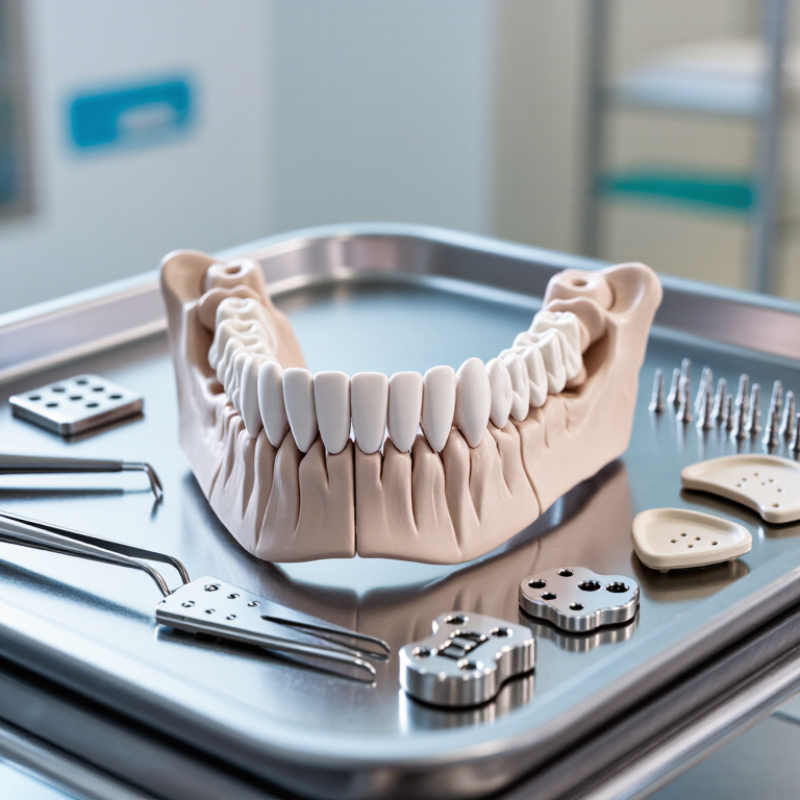
A typical system includes bone plates, fixation screws, drill guides, drivers, contouring instruments, and storage trays. Plates may be straight, curved, orbital, mandibular, or designed for smaller facial regions. Screw diameter, length, thread design, and locking behavior also matter. During preparation, the surgeon may shape a plate carefully to follow the bone surface. Excessive bending can weaken its performance.

Clinical uses include repair of jaw fractures, cheekbone injuries, orbital wall defects, and midface trauma. These systems also support planned reconstructive and corrective procedures. Reliable use depends on imaging, sterile technique, anatomical knowledge, and accurate screw placement. In my experience, small details matter: a plate sitting unevenly can irritate tissue or compromise stability. Yet hardware is not the entire treatment. Patient healing, nutrition, follow-up care, and infection monitoring remain important. Product evaluations should consider material quality, instrument compatibility, training support, and documented clinical performance. Evidence can be limited for some newer designs, so cautious judgment is still necessary.

Key Criteria for Evaluating Maxillofacial Plating System Suppliers

2026 Top Maxillofacial Plating Systems Suppliers?

Key Criteria for Evaluating Maxillofacial Plating System Suppliers

Selecting a supplier requires more than comparing plate prices. Clinical evidence, material traceability, and surgeon training deserve greater weight. The WHO Global Patient Safety Report 2024 states that one in ten patients experiences harm during healthcare delivery. That figure makes quality controls highly relevant for maxillofacial fixation.

Review the supplier’s ISO 13485 certification, risk-management records, and post-market surveillance process. Ask for evidence on titanium composition, fatigue strength, screw locking performance, and sterilization compatibility. ASTM F382 testing can support claims about metallic plate strength. Suppliers should also provide clear instructions, lot-level traceability, complaint data, and documented corrective actions. Regulatory clearance is important, but it does not prove excellent clinical performance. A polished certificate can still hide weak support.

Tips: Request anonymized clinical data from comparable fracture and reconstruction cases. Check whether the supplier offers hands-on training, rapid replacement, and local technical support. Measure response times, not promises. We should also admit one limitation: published market reports often estimate market size, but rarely compare real-world plate outcomes. Therefore, combine reports with surgeon interviews, hospital audits, and actual case feedback. Small details matter, especially screw fit, contouring behavior, and packaging clarity.

Leading Maxillofacial Plating Systems Suppliers in 2026

Leading maxillofacial plating systems suppliers in 2026 are judged by more than product variety. Experienced surgical teams look for precise titanium plates, reliable screws, and designs for mandibular, midface, orbital, and zygomatic repairs. The best suppliers provide clear technical files, validated sterilization information, and traceable lot numbers. These details matter when a plate is selected during a demanding operation.

Strong suppliers also support real clinical work. They offer practical fitting guidance, instrument training, and responsive technical assistance. A useful system should bend predictably without weakening and should reduce unnecessary drilling time. Surgeons may review anatomical models before surgery, while engineers assess fatigue resistance and screw engagement. Procurement teams should examine delivery records, complaint handling, and post-market surveillance data. Claims without evidence deserve caution.

No supplier is perfect. Some systems perform well in complex cases but have limited regional inventory. Others offer broad customization yet require longer production times. Hospitals should compare published testing with their own surgical experience. Ask how revisions are documented. Check whether replacement instruments arrive quickly. Small gaps can become serious delays.

Cost still matters. However, the lowest quotation may not reflect training, instrumentation, or sterile packaging. Reliable suppliers explain limitations openly and update documentation when evidence changes. In 2026, practical transparency may distinguish a dependable partner from a merely impressive catalog.

Product Technologies and Materials Used in Maxillofacial Plates

Maxillofacial plating systems now combine established metals with patient-specific manufacturing. Titanium remains widely used because it offers high strength, corrosion resistance, and favorable tissue compatibility. Its thin profile also helps reduce palpable edges beneath facial skin. Titanium plates often use locking screw holes, which can improve fixation in thin or fragmented bone.

Polyether ether ketone, or PEEK, provides radiolucency and an elastic modulus closer to bone. That can reduce imaging artifacts, although its fixation and long-term clinical handling require careful evaluation. Resorbable polymers, including polylactic and polyglycolic compounds, may avoid permanent hardware removal. Their strength declines over time. That timing must match bone healing.

No material is perfect.

Grand View Research reported continued growth in the global craniofacial implants market, supported by trauma care, reconstructive surgery, and personalized implants. Its market estimates vary by product definition, so suppliers should not treat one figure as absolute. MarketsandMarkets has also identified computer-assisted planning and additive manufacturing as important development areas. These technologies can convert CT data into patient-specific plates with improved contour accuracy.

In practical use, surgeons still assess more than material composition. They examine plate thickness, screw compatibility, bending behavior, sterilization validation, and fatigue performance. ASTM testing and documented quality systems strengthen supplier credibility. Yet laboratory data cannot fully predict surgical outcomes. Fit may change with swelling, bone loss, or imperfect intraoperative positioning. That limitation deserves honest attention.

Regulatory, Quality, and Procurement Considerations for Buyers

2026 Top Maxillofacial Plating Systems Suppliers?

For buyers, supplier evaluation should begin with regulatory evidence, not catalogue appearance. Confirm the device classification and registration route in each target market. Requirements differ across jurisdictions. Request current certificates, declarations, technical files, and post-market surveillance procedures. A certificate alone proves little. Check its scope, issuing body, expiration date, and covered product families.

Quality review should examine the plating system at component level. Inspect plate geometry, screw engagement, locking performance, and instrument compatibility. Ask for material specifications and biocompatibility evidence. ISO 13485 certification supports a controlled quality system, while ISO 14971 documentation shows risk-based thinking. Confirm sterilization validation when products are supplied sterile. Review lot traceability, complaint handling, recall procedures, and change-control notices. Document every lot.

Procurement teams should test the supplier’s operational reliability. Compare lead times, minimum order quantities, replacement policies, and training support. Ask whether technical assistance is available during complex mandibular or midface procedures. Evaluate packaging integrity after transport simulation. A damaged tray can delay surgery. It happens. Review samples with surgeons, nurses, and sterile-processing staff before approval. A polished presentation may conceal awkward instruments or inconsistent labeling. Do not ignore those details. Tender scoring should include total cost, not only unit price. Include inventory risk, staff training, regulatory updates, and emergency supply capacity. No checklist is perfect. Reassess suppliers after audits, field feedback, and major product changes.

2026 Top Maxillofacial Plating Systems Suppliers? - Regulatory, Quality, and Procurement Considerations for Buyers

Evaluation Dimension Buyer Requirement Evidence to Request Recommended Acceptance Benchmark Risk if Not Verified Procurement Priority
Quality management system A controlled medical-device quality system covering design, manufacturing, complaints, CAPA, and supplier controls. Current ISO 13485 certificate, certificate scope, issuing certification body, audit status, and CAPA summary. Valid ISO 13485 certification with scope covering relevant implantable or sterile orthopedic devices. Inconsistent production controls, weak traceability, and delayed corrective actions. Critical
Market authorization The product must be legally marketable in the destination country and match the intended use, anatomical site, and device configuration. Applicable registration, clearance, approval, or conformity documentation; product listing; intended-use statement; and labeling. Authorization verified for the exact system, component family, and target market before purchase order release. Import holds, unlawful distribution, product seizure, or inability to use the system clinically. Critical
Regulatory pathway The supplier should clearly identify the regulatory classification and required submission pathway for each market. Regulatory classification rationale, submission reference where applicable, declaration of conformity, and technical documentation index. No discrepancy between product claims, technical files, labeling, and market authorization records. Unapproved claims, customs delays, or regulatory nonconformity. High
Material specification Implant materials must be defined, biocompatible for the intended use, and consistent across product drawings and certificates. Material grade, heat or lot certificate, chemical composition, mechanical properties, and supplier change-control procedure. Material identity and lot traceability documented for every plate, screw, and critical instrument component. Unexpected corrosion, mechanical failure, incompatibility, or inability to investigate complaints. Critical
Biological safety Biological evaluation should address the finished device, patient contact type, duration, processing, and residual substances. Biological evaluation plan and report, material characterization, toxicological assessment, and applicable ISO 10993 test reports. Evaluation covers the final finished device and is supported by risk-based scientific justification. Patient reaction, incomplete regulatory submission, or delayed product qualification. Critical
Mechanical performance The plate-and-screw system should demonstrate mechanical suitability for the stated maxillofacial indications and design configuration. Design verification protocol, bending or fatigue data where relevant, screw insertion data, and test-method justification such as ASTM F543 or ASTM F382 when applicable. Test methods are suitable for the device design, acceptance criteria are predefined, and reports are traceable to production-equivalent samples. Loss of fixation, plate deformation, screw breakage, or inadequate clinical performance. Critical
Design verification and validation The supplier must demonstrate that the system meets user needs, design inputs, and intended clinical functions. Design history or technical file extracts, usability evidence, cadaver or simulated-use testing where applicable, and verification traceability matrix. All critical design inputs trace to objective verification or validation evidence. Poor fit, difficult handling, surgical delays, and unanticipated use errors. High
Risk management Risks such as loosening, breakage, soft-tissue irritation, incorrect assembly, and instrument misuse should be assessed and controlled. ISO 14971-based risk-management summary, hazard analysis, residual-risk assessment, and post-market feedback process. Risk controls are linked to verification evidence, labeling, training, and complaint monitoring. Hidden hazards, inadequate warnings, and recurring field complaints. High
Sterilization and packaging Sterile products must maintain sterility through the stated shelf life and distribution conditions; reusable instruments need validated reprocessing instructions. Sterilization validation, packaging validation, seal-strength or integrity data, shelf-life evidence, and reprocessing validation where applicable. Packaging and sterilization records are available for the supplied configuration and stated expiry period. Loss of sterility, operating-room disruption, or infection-control concerns. Critical
Traceability and UDI Each product, lot, and applicable device identifier should be traceable from receipt through clinical use and complaint handling. Lot or serial-number format, UDI records where required, certificates of conformity, and recall procedure. Traceability can be demonstrated within one business day for a sampled shipment. Slow recalls, incomplete investigations, and inventory reconciliation problems. High
Product portfolio fit The portfolio should cover required plate geometries, screw diameters and lengths, fixation options, instruments, and anatomical indications. Current catalog, dimensional drawings, compatibility matrix, instrument list, and discontinued-product policy. At least 95% of the buyer’s defined procedure and inventory requirements are covered without unverified substitutions. Fragmented purchasing, incompatible components, and increased inventory complexity. High
Interoperability controls Plates, screws, drivers, drills, guides, and trays should be used only in combinations supported by the supplier’s technical documentation. Compatibility matrix, interface dimensions, torque guidance, driver specifications, and warnings against unvalidated combinations. Every purchased component has an identifiable, documented compatible set. Stripped screw heads, poor fixation, instrument damage, or surgical delays. High
Supplier change control Changes to materials, processes, tooling, sterilization, packaging, labeling, or manufacturing location must be communicated and assessed. Change-notification procedure, customer notification lead time, regulatory impact assessment, and sample requalification process. Written notification before implementation for changes that may affect fit, form, function, safety, or regulatory status. Uncontrolled product variation and unexpected requalification costs. High
Manufacturing capacity Capacity should support forecast demand, emergency orders, and continuity during equipment or facility disruptions. Capacity statement, production lead times, bottleneck analysis, business-continuity plan, and validated alternate sites if available. Documented capacity covers forecast demand plus agreed safety stock and contingency requirements. Backorders, cancelled procedures, and unplanned spot-buy costs. High
Lead time and service level Delivery commitments should reflect standard replenishment, custom configurations, and urgent surgical requirements. Historical on-time-in-full data, standard and expedited lead times, order-confirmation process, and escalation contacts. Target service level of at least 95% on-time-in-full, subject to a documented contract definition. Stockouts, procedure postponements, and excessive safety inventory. High
Documentation package Technical, quality, regulatory, logistics, and clinical-use documents should be current, consistent, and available in the required language. Instructions for use, surgical technique guide, labels, certificates, inspection records, declarations, and revision history. Document revisions match the supplied product and are delivered through a controlled document process. Training errors, receiving delays, and audit findings. High
Complaint and vigilance support The supplier should investigate complaints, adverse events, nonconformities, and potential field actions within agreed timelines. Complaint procedure, response-time commitments, trend reports, field-action process, and designated quality contact. Initial acknowledgment within 2 business days and documented investigation timelines based on severity. Delayed containment, repeated failures, and regulatory reporting exposure. High
Total cost of ownership Evaluation should include unit price, instruments, trays, sterilization, freight, training, inventory carrying cost, and replacement cost. Detailed quotation, price validity, freight terms, minimum order quantity, warranty, service fees, and five-year cost model. Award decision based on lifecycle cost and clinical suitability, not unit price alone. Unexpected operating expenses and misleading price comparisons. Medium
Training and clinical support Users should receive appropriate instructions for system selection, contouring, drilling, screw insertion, and instrument handling. Training curriculum, competency records, surgical technique materials, proctoring policy, and support coverage. Training is available before first use and after material design or technique changes. Incorrect assembly, avoidable instrument damage, and inconsistent clinical use. Medium
Contract protections Commercial terms should define quality responsibilities, delivery performance, recalls, warranty, liability, confidentiality, and termination rights. Quality agreement, supply agreement, service-level agreement, warranty terms, insurance evidence, and recall-cost allocation. Quality and commercial agreements are signed before routine supply and include measurable remedies. Unclear responsibility during defects, recalls, delays, or regulatory investigations. High
Buyer note: Regulatory obligations vary by jurisdiction, product configuration, intended use, and sterile or non-sterile presentation. Buyers should verify current requirements with the relevant competent authority and perform supplier qualification before placing a production order.

FAQS

What is a maxillofacial plating system?

It is a set of plates and screws used to stabilize facial bones during healing. The system may also include drills, drivers, guides, contouring tools, and storage trays.

Which facial injuries can these systems support?

They may support jaw fractures, cheekbone injuries, orbital wall defects, and midface trauma. They can also assist planned reconstructive procedures.

How does a surgeon select a suitable plate?

The surgeon considers bone thickness, fracture direction, soft-tissue coverage, and expected loading. Patient anatomy matters greatly. No system fits every face.

Why does plate contouring require care?

A plate may need careful shaping to follow the bone surface. Excessive bending can weaken its performance. Fit matters.

What should teams check before placing screws?

They should confirm imaging, plate position, screw length, thread design, and bone quality. Accurate placement helps maintain stability and reduce tissue irritation.

What makes a supplier suitable for clinical use?

Review material traceability, risk-management records, training support, and post-market surveillance. Check documented clinical performance, not only product prices.

Which supplier documents deserve close attention?

Ask for ISO 13485 certification, sterilization compatibility, complaint records, and corrective-action documentation. Evidence about fatigue strength and screw locking is also useful.

How can hospitals assess real-world supplier support?

Request comparable clinical data and speak with surgeons or hospitals. Measure replacement times and technical response times. Promises are not enough.

Does regulatory clearance prove excellent clinical performance?

No. Clearance supports regulatory compliance, but it does not guarantee superior outcomes. Evidence for newer designs may remain limited.

What factors affect recovery after fixation?

Healing depends on stable fixation, nutrition, follow-up care, and infection monitoring. Hardware is only one part of treatment. Small details matter.

Conclusion

This guide examines the 2026 market for Maxillofacial Plating Systems, explaining their role in stabilizing facial bones after trauma, reconstructive procedures, and corrective surgery. It outlines the main components, including plates, screws, instruments, and fixation accessories, while describing how system design supports anatomical adaptation, surgical efficiency, and patient-specific treatment planning. Readers will also learn how to evaluate suppliers based on product reliability, material quality, technical support, customization capabilities, manufacturing consistency, and long-term supply stability.

The overview compares common technologies and materials, such as titanium alloys, commercially pure titanium, and selected bioresorbable polymers, with attention to strength, biocompatibility, imaging compatibility, and handling characteristics. It also highlights essential regulatory, quality-management, documentation, sterilization, training, and procurement considerations. By applying these criteria, hospitals, distributors, and surgical teams can identify dependable suppliers that provide clinically appropriate systems, transparent compliance information, and consistent support for safe and efficient maxillofacial care.

Aria

Aria

Aria is a dedicated marketing professional with a deep passion for innovative strategies and a keen understanding of our company's product offerings. With a wealth of experience in the industry, Aria excels at crafting engaging content that highlights the unique features and benefits of our......