2026 Top Cortical Screws Manufacturers for Global Buyers?

Time:2026-10-02 Author:Liam
0%

Choosing among the 2026 Top Cortical Screws Manufacturers for Global Buyers requires more than comparing catalog prices. These implants support precise fixation in demanding orthopedic procedures, where thread geometry, material quality, and dimensional accuracy can affect surgical confidence. A reliable manufacturer should demonstrate controlled production, documented quality systems, and consistent batch traceability.

This guide examines manufacturers through practical buyer concerns. These include titanium and stainless-steel options, screw diameter and length ranges, thread profiles, surface finishing, packaging protection, and customization support. Certifications such as ISO 13485 may strengthen a supplier’s credibility, but certificates alone do not prove dependable performance. Buyers should also review inspection records, sterilization arrangements, complaint handling, and delivery history.

Small details matter. A clearly marked package. A readable lot number. A stable thread under inspection. These signals reveal operational discipline. Direct communication with technical teams can clarify whether a supplier understands anatomy, instrumentation, and hospital workflows. Yet no ranking can fit every market. A manufacturer strong in high-volume export may not suit a buyer needing small batches or private-label support.

The comparison therefore considers experience, engineering capability, regulatory readiness, and supply reliability. It also recognizes an uncomfortable reality: public information is sometimes incomplete, outdated, or promotional. Independent verification remains necessary. Global buyers should request current documentation, evaluate samples where appropriate, and confirm local registration requirements before making a purchasing decision. The best choice is not always the largest factory. It is the partner that can repeatedly deliver safe, traceable Cortical Screws with evidence to support every claim.
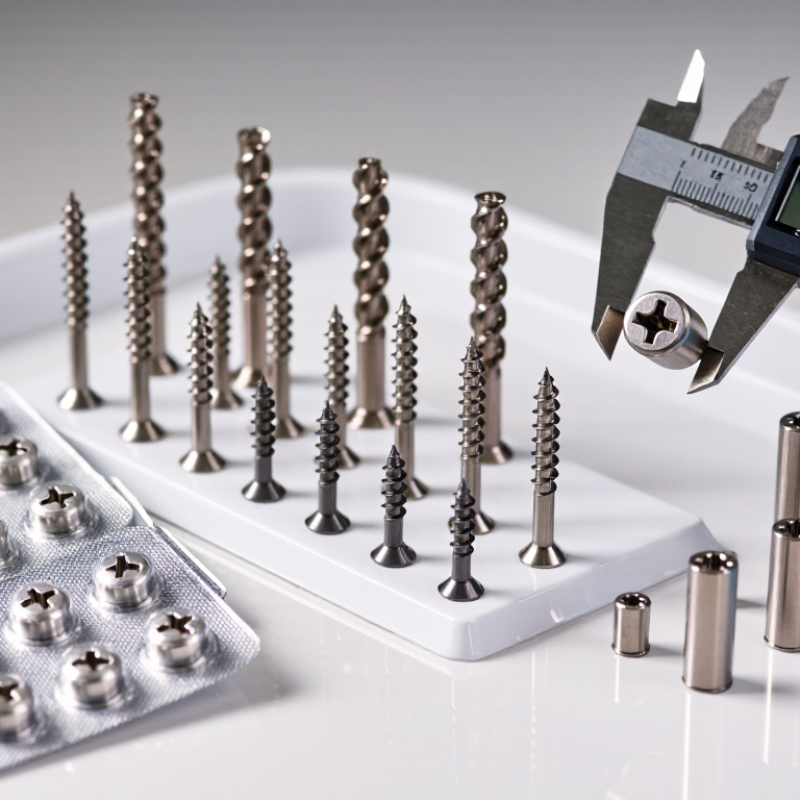
2026 Top Cortical Screws Manufacturers for Global Buyers?

What Are Cortical Screws and Where Are They Used?

Cortical screws are fixation devices designed for dense cortical bone, the hard outer shell of a bone. Their threads are usually fine and closely spaced, allowing strong purchase in areas with limited thread depth. Surgeons commonly use them with plates for shaft fractures, osteotomies, and selected arthrodesis procedures. In bicortical fixation, the screw may pass through both cortices. Placement still depends on anatomy, drilling technique, and soft-tissue protection.

The 2024 Grand View Research assessment estimated the global orthopedic implants market at more than USD 48 billion in 2023, with continued growth expected through 2030. This expansion supports demand for reliable trauma fixation products, but market growth does not prove clinical quality. Buyers should examine fatigue testing, torque data, dimensional tolerances, surface finish, and material certificates. ASTM F543 provides recognized testing methods for metallic medical bone screws. ISO 10993 documentation also helps assess biological safety. A perfect screw on paper can still fail in the wrong bone.

Tips: Compare thread geometry, core diameter, drive design, and available lengths. Ask for sterilization validation and lot traceability. Confirm compatibility with the intended plate system. Do not judge value by unit price alone; inconsistent instruments can increase operating time. Reports may look precise, yet regional demand estimates remain imperfect. Procurement teams should review clinical evidence and regulatory files with qualified professionals.

How to Evaluate Cortical Screw Manufacturers in 2026

How to Evaluate Cortical Screw Manufacturers in 2026

The broader orthopedic-device market reached an estimated USD 47.4 billion in 2023, according to Grand View Research. Its projected growth increases supplier choices, but not necessarily supplier quality. WHO reports that musculoskeletal conditions affect about 1.71 billion people worldwide. That scale makes implant consistency more than a purchasing concern.

Start with evidence, not catalog images. Request material certificates, dimensional inspection records, and batch-level traceability. Check whether testing follows ASTM F543 for bone screws and whether biological evaluation follows ISO 10993. Pullout strength, torsional performance, thread accuracy, and fatigue results should match the intended anatomy. Ask for raw data. A glossy certificate is not enough.

Review the manufacturer’s ISO 13485 quality system, process validation, sterilization controls, and complaint-handling records. FDA’s public device databases can help buyers examine registration, listings, and reported safety information. Production capacity also deserves a factory-level check. Can the supplier quarantine one questionable batch within hours? Can it reproduce the same thread profile six months later? These questions expose practical maturity.

Cost comparisons often hide inspection, packaging, and replacement risks. I would compare three recent lots, not one sample. The sample may be unusually perfect. That is an uncomfortable possibility. Also examine supplier change-control procedures, subcontractor oversight, and technical support after delivery. A manufacturer that answers slowly during qualification may respond even slower after a field issue.

Leading Cortical Screw Manufacturers for Global Buyers

Leading cortical screw manufacturers for global buyers are judged by more than catalog size. Fortune Business Insights estimated the global orthopedic devices market at approximately USD 47 billion in 2023, with steady growth expected through 2032. This expansion increases demand for dependable trauma fixation components. Buyers should examine machining experience, material traceability, dimensional inspection, and sterilization compatibility. Titanium alloy and stainless steel screws require controlled processes. Small thread errors can affect insertion.

Look for manufacturers operating under ISO 13485 quality systems and using validated inspection methods. ASTM F543 testing can help assess torsional strength, driving torque, and insertion performance. Production records should connect each batch to raw material certificates and inspection results. Ask for evidence, not promises. Independent audits are useful. So are sample evaluations.

A supplier may offer excellent documentation yet lack consistent delivery capacity. That gap matters during hospital tenders and distributor planning.

Industry reports often combine screws with broader orthopedic device categories, so market figures are not exact forecasts for cortical screws alone. This limitation deserves attention. Global buyers should compare lead times, packaging controls, regulatory registrations, and technical support by destination market. Experienced manufacturers can explain thread profiles, screw diameters, and instrument compatibility without vague claims. Pricing still matters, but the lowest quotation may hide inspection limits or unstable sourcing. Better decisions come from reviewing actual quality records, pilot samples, and post-delivery feedback.

What Standards Govern Cortical Screw Quality and Safety?

Cortical screws must meet more than a polished surface and a clean thread. Global buyers should review the manufacturer’s quality system against ISO 13485. This standard supports controlled design, production, inspection, and corrective actions. ISO 14971 adds a structured process for identifying risks, such as breakage, loosening, or incorrect sizing. These documents show how problems are managed, not merely how products are advertised.

Mechanical performance also needs objective testing. ASTM F543 is widely used for metallic bone screw evaluations, including insertion torque, removal torque, torsional strength, and axial pullout. Dimensional checks should confirm thread profile, diameter, length, drive recess, and material grade. Biological safety requires an evaluation under ISO 10993. Packaging and sterilization validation may involve ISO 11607 and the relevant sterilization standard. Market rules still differ. A certificate alone does not prove every requirement is satisfied.

Tips: Request lot-specific inspection records, material certificates, sterilization evidence, and traceability details. Ask whether testing used the exact screw design, not a similar sample. Check for surface damage under magnification. Small defects matter. In practice, buyers sometimes focus too heavily on tensile strength. That can be misleading, because surgical handling, bone quality, and insertion technique also influence performance. No standard removes clinical judgment.

2026 Top Cortical Screws Manufacturers for Global Buyers? — What Standards Govern Cortical Screw Quality and Safety?
Quality Dimension Applicable Standard or Regulation What It Covers for Cortical Screws Evidence Global Buyers Should Request Buyer Relevance Important Limitation
Mechanical performance ASTM F543
Standard Specification and Test Methods for Metallic Medical Bone Screws
Defines requirements and test methods commonly used to evaluate metallic bone-screw performance, including insertion torque, torsional properties, driving characteristics and axial pullout strength. Product test reports, specimen configuration, material condition, screw dimensions, test method, acceptance criteria and lot or batch traceability. High ASTM F543 is a testing and specification reference; it is not, by itself, a complete regulatory approval.
Screw geometry and drive connection ISO 5835
Implants for surgery — Metal bone screws with hexagonal drive connection, spherical under-surface of head, mechanical requirements and test methods
Addresses specified metal bone-screw configurations, dimensional characteristics and mechanical test methods for applicable screw designs. Technical drawing, dimensional inspection report, drive-interface measurements, gauge results and design verification records. High Applicability depends on the screw design; other head shapes, drive systems or intended uses may require additional specifications.
Material identity and corrosion resistance ASTM F138 / ISO 5832-1
Wrought stainless steel for surgical implants

ASTM F136 / ISO 5832-3
Wrought titanium alloy for surgical implants
Specify chemical, metallurgical and mechanical requirements for commonly used implant metals, including implant-grade stainless steel and titanium alloy. Material certificate, heat or melt number, chemical composition, mechanical-property results, passivation or surface-treatment records and full traceability. High The selected material must match the approved design, sterilization method, clinical use and applicable jurisdictional requirements.
Biological safety ISO 10993 series
Biological evaluation of medical devices
Provides a risk-based framework for evaluating biological effects such as cytotoxicity, sensitization, irritation, systemic toxicity and other endpoints appropriate to the device and patient contact. Biological evaluation plan and report, material characterization, chemical assessment, test reports where needed and rationale for any omitted tests. High ISO 10993 does not mean that every test in the series is required; the evaluation depends on contact type, duration and material risks.
Quality management system ISO 13485:2016
Medical devices — Quality management systems
Controls design, purchasing, production, process validation, traceability, nonconforming product, corrective action and post-market processes. Current certificate from an accredited certification body, certificate scope, site coverage, expiry date, audit status and documented change-control process. High Certification supports quality-system capability but does not prove that every individual screw lot meets specification.
Risk management ISO 14971:2019
Application of risk management to medical devices
Requires identification, evaluation, control and monitoring of risks such as breakage, deformation, incorrect dimensions, corrosion, biological reaction and misuse. Risk-management plan, hazard analysis, risk-control measures, verification evidence, residual-risk evaluation and production or post-market feedback. High Risk management should be linked to the specific product family and intended use rather than presented only as a generic corporate policy.
Sterilization validation ISO 11135 for ethylene oxide sterilization
ISO 11137 for radiation sterilization
ISO 17665 for moist-heat sterilization
Establishes requirements for developing, validating and routinely controlling applicable sterilization processes for sterile products. Sterilization validation summary, cycle parameters, bioburden data, sterility testing or dose audits where applicable, packaging compatibility and release records. High for sterile products Non-sterile screws do not require a sterilization claim, but packaging and cleaning controls still need to match the stated product condition.
Sterile barrier packaging ISO 11607-1 and ISO 11607-2
Packaging for terminally sterilized medical devices
Addresses packaging materials, sterile-barrier design, forming, sealing, assembly, process validation and package integrity for terminally sterilized products. Packaging validation, seal-strength results, dye or leak testing, accelerated-aging data, transit testing and shelf-life justification. High for sterile products Packaging performance must be assessed with the actual device, packaging configuration and sterilization process.
Labeling and instructions ISO 15223-1
Symbols for medical-device labels

ISO 20417
Information supplied by the manufacturer
Supports consistent symbols and required information relating to identification, handling, storage, warnings, intended use and device traceability. Artwork-controlled labels, instructions for use, UDI or equivalent identification where required, storage conditions, warnings and revision history. High Specific labeling and language requirements vary by destination market and product classification.
United States market access U.S. FDA requirements
Applicable device classification, premarket submission requirements, registration and listing, UDI, labeling and quality-system obligations
Determines the regulatory pathway and evidence expected for marketing in the United States. FDA requirements should be checked against the exact device classification and intended use. Regulatory classification, clearance or authorization where applicable, establishment registration and device listing status, labeling package and quality-system documentation. Market-specific ISO certificates or ASTM test reports alone do not constitute FDA marketing authorization.
European Union market access Regulation (EU) 2017/745 (MDR)
Medical devices regulation
Governs classification, technical documentation, clinical evaluation, conformity assessment, post-market surveillance, vigilance and labeling for applicable devices placed on the EU market. CE-marking basis, EU declaration of conformity, technical documentation summary, notified-body information where required, clinical evaluation and post-market plan. Market-specific CE marking is not a universal quality grade and must correspond to the correct device classification and conformity route.
Lot release and traceability ISO 13485 and applicable regional regulations Supports identification of raw materials, manufacturing lots, inspection results, released quantities, nonconformities and distribution records. Certificate of conformity, inspection record, batch number, material heat number, manufacturing date, quantity released and authorized release signature. High A certificate of conformity should be matched to the exact product code, dimensions, material and production lot.
Supplier selection indicator Evidence-based purchasing review Compares suppliers using objective evidence rather than company size, marketing claims or an unsupported “top manufacturer” ranking. Verified certificates, sample inspection, independent testing when justified, audit findings, complaint history, delivery performance and documented corrective-action capability. High No single certificate proves overall product superiority; acceptance criteria should be defined before supplier comparison.
Buyer note: Standards are generally voluntary until incorporated into a regulation, contract, purchasing specification or conformity-assessment process. Always confirm the intended use, screw design, material, sterile or non-sterile status and destination-market requirements before approving a cortical-screw supplier.

How to Select a Reliable Supplier for International Orders

Selecting a reliable cortical screw supplier requires more than comparing unit prices. The global orthopedic devices market was valued at about USD 47.4 billion in 2023, according to Fortune Business Insights. That scale attracts capable manufacturers and inconsistent traders. Request ISO 13485 certification, recent audit records, material certificates, and batch-level traceability. For titanium screws, verify alloy grade, thread geometry, dimensional tolerances, surface finish, and fatigue-test results. A supplier should explain these details clearly.

International orders need document discipline. Ask for product drawings, inspection reports, sterilization information, packaging validation, and country-specific regulatory documents. Confirm whether the factory or a trading company controls production. The World Health Organization reports that approximately 1.71 billion people live with musculoskeletal conditions. Demand is substantial, but demand alone does not prove quality. Sample approval should include dimensional checks and independent laboratory testing where risk justifies the cost. One mistake here can affect an entire shipment.

Tips: Visit the production site, even virtually. Check calibration dates. Compare three recent batches. Confirm lead times in writing. Review complaint-handling procedures and recall support. Do not rely on certificates alone; documents can be outdated, incomplete, or poorly understood. A smaller supplier may communicate better, yet lack backup capacity. That trade-off deserves honest review. Ask difficult questions early. Good procurement is sometimes slower.

FAQS

What evidence should I request from a cortical screw manufacturer?

Request material certificates, dimensional inspection records, and batch-level traceability. Ask for raw test data, not only polished certificates. Check whether records identify the exact screw design and production lot.

Which standards should guide cortical screw evaluation?

Review ISO 13485 for quality management and ISO 14971 for risk control. ASTM F543 can support mechanical testing of bone screws. ISO 10993 helps assess biological safety. Packaging and sterilization require separate validation.

What mechanical tests matter most?

Review insertion torque, removal torque, torsional strength, axial pullout, and fatigue results. Thread accuracy matters too. Testing should match the intended anatomy and screw design. Tensile strength alone can mislead.

How can I verify material and dimensions?

Check the alloy grade, diameter, length, thread profile, drive recess, and surface finish. Compare inspection results with approved drawings. Inspect surfaces under magnification. Small scratches may matter.

How should I evaluate production consistency?

Compare three recent production lots, not one attractive sample. Ask whether the supplier can reproduce the same thread profile months later. Check calibration dates and process-validation records.A questionable sample can happen.

What documents are important for international orders?

Request product drawings, inspection reports, sterilization evidence, packaging validation, and country-specific regulatory documents. Confirm lead times in writing. Make sure documents are current and complete.

How can I assess a supplier’s quality system?

Review quality certification, recent audit records, complaint handling, corrective actions, and recall support. Ask how quickly one questionable batch can be quarantined. Slow answers during qualification deserve attention.

Should I visit the factory before ordering?

A physical or virtual visit can reveal production controls, inspection equipment, and capacity. Confirm whether the factory controls manufacturing or depends on subcontractors. A smaller supplier may communicate better but lack backup capacity.

How should I compare supplier prices?

Compare total risk, not only unit cost. Include inspection, packaging, replacement, testing, and possible delay expenses. Low prices may hide weak controls. I might still overestimate documentation, so practical verification remains necessary.

Conclusion

Cortical Screws are precision-engineered orthopedic devices designed to achieve secure fixation in dense cortical bone, supporting procedures such as fracture repair, reconstructive surgery, and stabilization of small bone fragments. For global buyers, evaluating manufacturers in 2026 requires attention to material quality, dimensional accuracy, surface finishing, production consistency, technical expertise, and the ability to provide reliable customization and documentation.

A dependable supplier should demonstrate compliance with applicable medical-device quality systems and product safety requirements, supported by traceability, inspection procedures, sterilization controls, and risk-management practices. International purchasers should also assess manufacturing capacity, lead times, packaging integrity, communication efficiency, after-sales support, and experience with export documentation. Comparing samples, certifications, testing records, and contractual terms can help buyers identify a stable partner and reduce supply-chain risks. By focusing on verified quality, transparent processes, and long-term service capability, organizations can select cortical screw suppliers that meet clinical, regulatory, and operational expectations.

Liam

Liam

Liam is a dedicated marketing professional with a profound expertise in the industry, where he excels at highlighting the unique advantages of our core products. With a keen understanding of market trends and consumer needs, Liam frequently updates our company’s professional blog, providing......