Acutrak Screws are headless compression screws used in selected orthopedic procedures to stabilize certain fractures and osteotomies. Many Acutrak designs use variable-pitch threads to bring bone fragments together as the screw advances, when anatomy and technique allow. But “best” is not universal. A small carpal bone, a narrow phalanx, and a larger fracture fragment can require different implant dimensions and surgical plans. Surgeons consider fragment size, bone quality, desired compression, screw length, approach, and imaging before choosing an implant. They should also check current manufacturer instructions and the patient’s specific clinical needs. Details matter.
This guide compares five Acutrak screw options, focusing on design, intended applications, sizing, instrumentation, and practical trade-offs. It does not assume that one model suits every patient or procedure. Product names and indications may differ by region or change over time, so current labeling deserves careful review. Clinical evidence and professional judgment matter more than marketing claims or a simple “top five” ranking. Even a careful comparison cannot capture every decision made in the operating room. That limitation is worth remembering. Patients should discuss implant choices, risks, alternatives, and recovery expectations with a qualified orthopedic professional. This overview is educational, not a substitute for individualized medical advice.
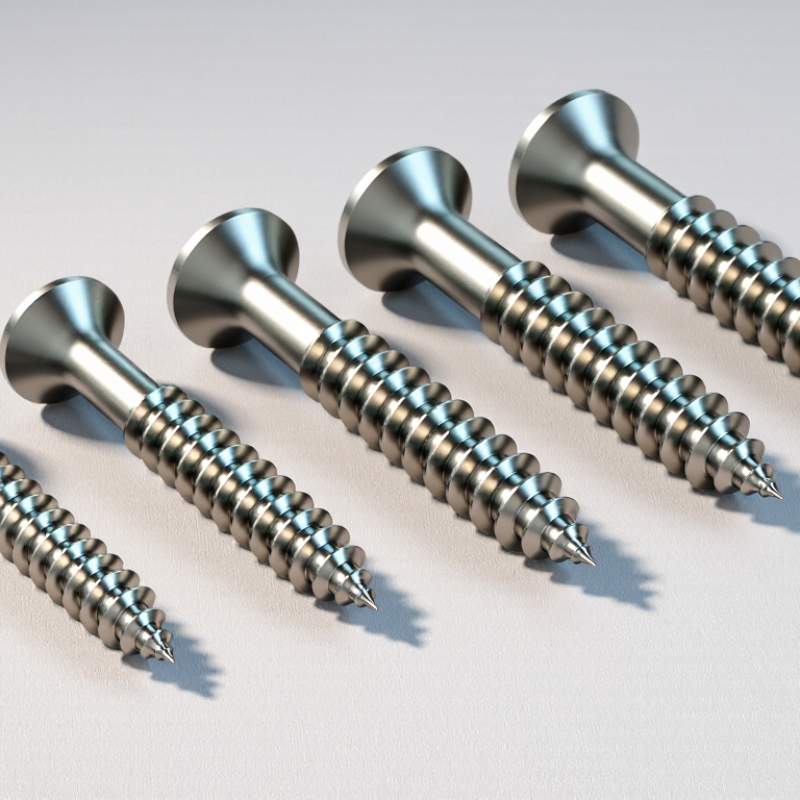
Conventional bone screws often have a distinct head that sits above the bone or presses against a plate. Headless compression screws are designed to sit beneath the surface. Their threads commonly have different pitches at each end, allowing the screw to draw two bone fragments together as it advances. The result can be a low-profile fixation. Less prominence matters near joints and tendons.
The mechanics are useful, but they are not magic. A surgeon must choose the screw length and trajectory carefully; a few millimeters can affect joint motion or fixation. For example, when stabilizing a small wrist bone, the screw may need to cross the fracture while remaining fully buried. Proper countersinking and imaging help confirm its position. Bone quality matters, too.
Compared with a conventional screw, a headless design may reduce irritation from a protruding head, but it can be harder to remove and may offer less flexibility for some fixation patterns. The distinction is not absolute: conventional screws also vary widely in shape and purpose. Selection depends on the bone, fracture pattern, and desired compression, not appearance alone. Even a well-chosen implant cannot compensate for poor placement or unstable bone.
General selection guide only. Screw dimensions, indications, and insertion techniques vary by design and manufacturer; use the applicable surgical technique guide and clinical judgment.
| Screw option | Typical size class | Common application examples | Design characteristics | Difference from a conventional headed screw |
|---|---|---|---|---|
| Extra-small headless compression screw | Approximately 1.5–2.0 mm diameter class; exact sizes vary | Selected small-bone or fragment fixation in the hand and foot | Low-profile, buried placement; some systems use a guidewire and cannulated insertion. | Can avoid a prominent screw head, but the small diameter limits its use to appropriately sized bones and fragments. |
| Small headless compression screw | Approximately 2.0–3.0 mm diameter class; exact sizes vary | Selected fractures or small osteotomies where a low-profile implant is desired | May use different thread pitches at each end to draw fragments together during insertion. | Compression may be generated by the screw’s thread geometry rather than by tightening a separate head against the near cortex. |
| Intermediate headless compression screw | Approximately 3.0–4.0 mm diameter class; exact sizes vary | Selected small-bone fractures, nonunions, and osteotomies, depending on anatomy | Available in different lengths and thread configurations; cannulation is design-specific. | A buried profile may reduce hardware prominence, while a conventional screw typically has a head that remains against the bone surface. |
| Large headless compression screw | Approximately 4.0–5.0 mm diameter class; exact sizes vary | Selected larger fragments or osteotomies when bone dimensions permit | Requires suitable bone stock, trajectory, and countersinking or burial according to the device technique. | Can provide compression without an exposed head, but insertion depth and fragment purchase require careful control. |
| Conventional headed bone screw (comparison) | Many diameter and length options; selected for the bone and fixation plan | Broad range of fracture fixation and bone fixation procedures | The screw head seats on the bone or a plate; compression technique depends on screw type and placement. | The head can provide a seating surface or plate connection, but may be more prominent than a properly buried headless screw. |
Selection depends on fracture pattern, bone size and quality, required fixation, soft-tissue considerations, and the specific implant’s instructions. Headless compression screws are not interchangeable with conventional screws or with one another.
It sits beneath the bone surface instead of leaving a prominent head. Different thread pitches may draw bone fragments together as the screw advances.
A buried profile may reduce irritation near joints or tendons. Less hardware prominence can matter.
Surgeons consider bone size, fracture pattern, bone quality, and the access route. The desired compression matters too; appearance alone is not enough.
A screw that is too long may pass through the far cortex. One that is too short may not capture both fragments. A few millimeters can matter.
Multiple imaging views can help confirm length and position. In a small wrist bone, the screw may need to cross the fracture while staying fully buried.
No. Micro, mini, standard, and longer options suit different situations, but size alone cannot guarantee stability. Anatomy and placement still matter.
Cannulated screws can be guided over a wire. The surgeon should check that the wire does not cross an unintended joint surface.
No. They may be harder to remove and less flexible for some fixation patterns. The best option depends on the specific fracture—and there is no single answer for every case.
Acutrak Screws are designed to provide compression across certain bone fractures, helping bring fracture surfaces together as the screw is advanced. Compared with conventional bone screws, their thread design and insertion mechanics may allow compression without relying on a separate step to create it. Available options can vary in length, diameter, and thread configuration, giving surgeons choices for different bones and fracture patterns.
Selecting a screw involves considering the bone’s size and quality, the fracture’s location and shape, and the stability needed for healing. Surgeons also weigh the benefits of compression and a low-profile implant against potential risks, such as poor fixation, irritation, or complications related to placement. The appropriate type and size depend on the individual case, surgical judgment, and the patient’s overall needs.

 Moventra Medical