Choosing the best China Cancellous Screws suppliers requires more than comparing prices or browsing polished product pages. Hospitals and orthopedic distributors need dependable partners who understand bone fixation, manufacturing controls, and clinical expectations. A supplier may offer titanium or stainless-steel screws, but material quality alone does not prove reliability.
This guide examines manufacturers through practical evidence. We consider production experience, engineering capability, quality systems, and export performance. Key checks include ISO 13485 certification, material traceability, dimensional inspection, surface finishing, and sterilization support. Thread geometry matters. A well-formed thread should engage cancellous bone smoothly and reduce unnecessary insertion resistance. Packaging also deserves attention, especially when screws travel through humid shipping conditions.
Ask for samples.
A serious supplier should provide clear specifications, inspection records, and consistent communication. Buyers can compare screw diameters, lengths, head designs, drive types, and compatibility with existing instruments. Factory audits may reveal details that catalogs hide, such as calibration practices, employee training, and rejected-product controls. These observations build practical confidence.
Still, no universal “best” supplier exists. The right choice depends on clinical application, target market, order volume, documentation needs, and regulatory requirements. Some companies appear highly capable but provide limited technical evidence. Others may have modest websites yet maintain disciplined production systems. That contrast deserves careful reflection. This overview will help readers assess leading China Cancellous Screws suppliers with a balanced, evidence-based approach, while recognizing that final approval should involve qualified orthopedic professionals and local regulatory review.
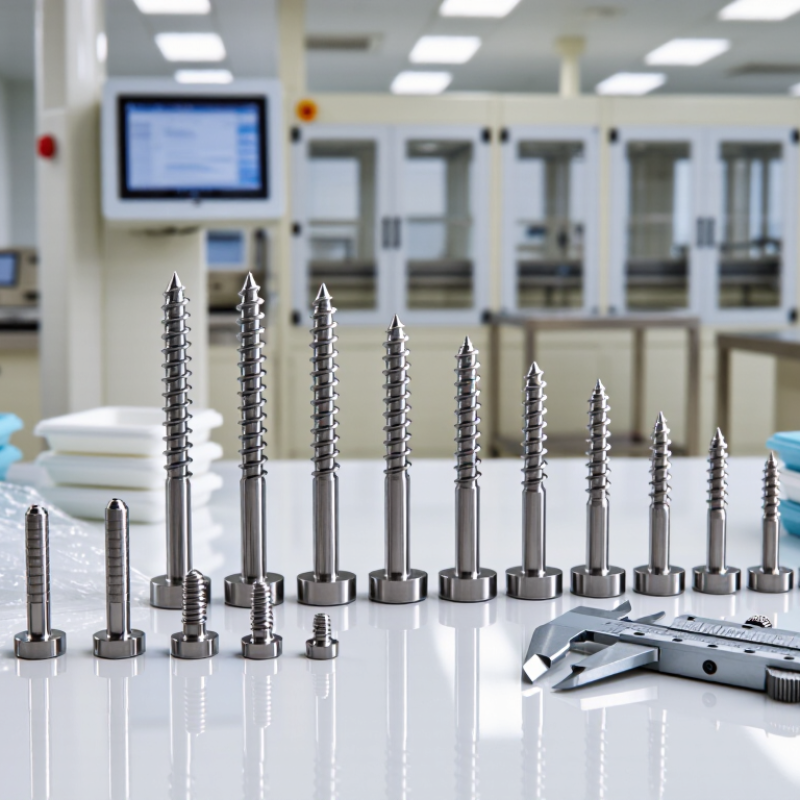
Cancellous screws are designed for softer, porous bone, especially metaphyseal regions. Common diameters range from 4.5 to 7.3 mm. The larger 7.3 mm shaft can provide stronger purchase, but it may require more bone stock and careful insertion. A 4.5 mm option fits smaller anatomy and less demanding fixation. That sounds simple. It is not.
Thread design matters more than diameter alone. Deep, widely spaced threads can improve grip in cancellous bone, while a partially threaded screw can create interfragmentary compression. Fully threaded designs may support position control when compression is not desired. Surgeons should compare thread length, pitch, core diameter, and tip geometry. Small changes can affect insertion torque and pull-out resistance. In practice, catalogue drawings are useful, but they cannot replace handling trials.
A 2024 MarketsandMarkets report forecasts the orthopedic devices market to grow at approximately 5% annually through 2029. This growth increases supplier competition, but does not prove product quality. China-based suppliers should provide material certificates, dimensional inspection records, fatigue-testing evidence, and validated sterilization information. ASTM F543 testing is a useful reference for metallic bone screws. ISO 13485 certification also supports process reliability. Still, certificates can hide gaps. Request lot traceability, coating details, and thread-gauge results before purchasing. The best supplier is not always the lowest-cost source.
Choosing the best China cancellous screws supplier requires more than comparing prices. Material selection strongly affects handling, strength, corrosion resistance, and clinical suitability. Two widely used options are 316L stainless steel and Ti-6Al-4V titanium.
316L stainless steel offers dependable strength and a familiar manufacturing history. Its smooth surface and corrosion resistance support consistent performance in demanding environments. However, it is relatively stiff and heavier than titanium.
Ti-6Al-4V is lighter and has a lower elastic modulus, which may better match bone behavior. It can also create less imaging interference in some situations. Neither material is perfect. Design, thread geometry, surface treatment, and production control still matter.
Tips:
Ask suppliers for material certificates, heat numbers, dimensional inspection records, and fatigue-test data. Check whether each lot is traceable from raw material to final packaging. During evaluation, inspect thread sharpness, cannulation, tip geometry, and driver fit. A reliable supplier should explain its testing methods clearly, not hide behind general claims. Request sample screws and review them under magnification. Small burrs can affect insertion. Packaging also deserves attention, especially when moisture or repeated handling could damage sterile barriers. My practical view is simple: choose evidence over polished brochures. Even experienced buyers can overlook tolerances when focusing only on alloy names. A supplier’s consistency across multiple batches often matters more than a single impressive sample.
What Are the Best China Cancellous Screws Suppliers?
Compliance should lead the supplier search, not the lowest quotation. ASTM F543 defines mechanical test methods for metallic bone screws, including insertion torque, pullout strength, and torsional performance. Ask for recent test reports, sample identification, fixture details, and acceptance criteria. A polished report without traceable samples is weak evidence.
ISO 13485 certification shows that a manufacturer operates a medical-device quality system. The 2023 ISO Survey recorded more than 39,000 ISO 13485 certificates worldwide. However, certification does not guarantee every cancellous screw is clinically suitable. Review the certificate scope, audit status, corrective-action records, and batch-release procedures. Check whether raw material certificates match the declared alloy and implant grade.
Biocompatibility needs equal attention. ISO 10993-1 promotes a risk-based evaluation, rather than one universal test package. Suppliers should explain testing for cytotoxicity, sensitization, irritation, systemic toxicity, and chemical characterization when relevant. Request reports from qualified laboratories, with extraction conditions and material identities clearly stated.
Look for measurable consistency. Inspect thread geometry, cannulation, surface finish, and dimensional tolerances across multiple lots. Packaging integrity matters too. Sterile products need validated sterilization and shelf-life evidence.
One practical warning remains. Factory visits can look excellent.
Production reality may differ.
A cautious buyer should compare independent test results with internal records. Supplier claims deserve verification, especially when documentation is translated, incomplete, or unusually perfect.
This chart compares the publication years of key compliance references commonly used when evaluating cancellous bone screw suppliers: ASTM F543 for metallic bone screw mechanical performance, ISO 13485 for medical-device quality management systems, and ISO 10993-1 for biological evaluation planning. Publication year is shown as a reference point, not as a supplier performance score.
When evaluating China cancellous screw suppliers, begin with OEM capability, not attractive catalog photos. Ask whether the factory controls design changes, material certificates, surface treatment, and packaging records. A capable supplier should provide drawings, tolerance ranges, thread specifications, and documented approval procedures for custom work. Request sample screws from the same production line, not specially polished samples.
MOQ deserves careful attention. A low MOQ may reduce inventory pressure, but it can increase unit cost or limit batch consistency. Ask how minimum quantities affect inspection, tooling, and replacement parts. Confirm lead time in writing, including sample approval, raw material purchasing, machining, cleaning, packaging, and shipment. A quoted 20-day delivery can become 35 days when one process is outsourced. That detail is easy to miss.
Quality data must be verifiable. Request batch-level dimensional reports, hardness results, torque or pull-out testing, and material traceability. For medical products, review the supplier’s quality system, manufacturing records, complaint process, and region-specific regulatory documentation. ISO 13485 certification is useful, but it does not replace an on-site audit or independent testing. Check whether test methods match your intended application. They sometimes do not. Keep signed specifications and approved samples as release references. A reliable supplier accepts questions, reports deviations honestly, and explains corrective actions with evidence rather than promises.
What Are the Best China Cancellous Screws Suppliers?
A reliable supplier comparison begins with the complete landed cost, not the quoted unit price. Request pricing for samples, tooling, packaging, inspection, shipping, and minimum order quantities. A low price may exclude fatigue testing or instrument compatibility. Confirm material grades, such as titanium alloy or surgical stainless steel, through mill certificates and independent test reports. Ask for batch traceability. This detail matters during clinical quality reviews.
Sterilization should match the intended product configuration. Suppliers may offer non-sterile screws or validated sterile packaging. Review ethylene oxide or radiation processes, residual limits, packaging integrity, and documented sterility assurance levels. Check validation against relevant standards, including ISO 11135, ISO 11137, and ISO 11607 where applicable. Small packaging defects can undermine an otherwise excellent screw. They are easy to overlook.
Customization should cover diameter, length, thread profile, cannulation, driver interface, surface finish, and surgical instruments. Require controlled drawings, tolerance data, sample approval, and change notification procedures. Global market access also depends on evidence, not attractive certificates. Examine ISO 13485 certification, product technical files, material biocompatibility data, and registrations required in each target market. FDA clearance is not the same as FDA certification. CE marking also requires careful regulatory verification. In my experience, supplier comparisons can still miss production consistency between lots. I would therefore request recent inspection records, retain samples, and a video audit of machining and cleaning controls.
| Supplier Profile | Typical Product Scope | Indicative Unit Price (USD, Non-Sterile) |
Minimum Order Quantity | Sterilization Options | Customization Capability | Quality and Testing Documentation | Common Global Certifications or Registrations | Typical Lead Time | Best Suited For |
|---|---|---|---|---|---|---|---|---|---|
| Profile A Standard-volume manufacturer |
Stainless-steel and titanium-alloy cancellous screws for routine orthopedic fixation; common head and thread configurations. |
$1.20–$3.80 Price varies by material, diameter, length, and order quantity. |
500–1,000 pieces per specification | Non-sterile supply Contract gamma sterilization available | Standard dimensions, laser marking, packaging artwork, and private-label documentation; limited tooling changes. | Material certificate, dimensional inspection, visual inspection, thread-gauge inspection, and batch traceability generally available upon request. | ISO 13485 quality-management certification is commonly available; export documentation depends on the product and destination. | 25–45 days after drawing and order confirmation | Distributors and hospitals purchasing established standard sizes |
| Profile B Regulatory-focused manufacturer |
Cancellous, partially threaded, and fully threaded bone screws with standardized surgical instrumentation and controlled packaging processes. |
$2.00–$5.50 Higher pricing reflects documentation, inspection, and packaging controls. |
300–800 pieces per specification | Non-sterile Ethylene oxide through qualified sterilization partners | Product drawings, tolerances, surface finish, packaging configuration, UDI labeling support, and controlled design changes. | Certificate of conformity, sterilization records when applicable, packaging validation support, risk-management files, and inspection reports may be supplied under agreement. | ISO 13485; CE-marking support may be available for applicable devices; FDA establishment or device-related requirements must be verified for the specific product. | 35–60 days, excluding regulatory review and sterilization release | Importers requiring stronger technical files and traceability |
| Profile C Custom-development manufacturer |
Patient-specific or application-specific screw geometry, unusual thread profiles, specialty lengths, and prototype-to-production support. |
$4.50–$12.00 Engineering and tooling charges may apply separately. |
100–300 pieces for pilot production; lower quantities may be possible for prototypes |
Non-sterile prototypes Gamma or ethylene oxide via validated external service | High: custom drawings, 3D files, thread geometry, head design, material selection, surface treatment, and dedicated fixtures. | Material verification, first-article inspection, dimensional reports, fatigue or torsion testing when specified, and design-history documentation. | ISO 13485 may be available; regulatory pathway, technical documentation, and market authorization should be confirmed for each customized device. | 8–16 weeks for development; repeat orders may be shorter | OEM projects, clinical development, and low-volume specialized applications |
| Profile D High-volume export manufacturer |
Frequently ordered cancellous screw sizes in stainless steel or titanium alloy, with standardized packaging and production batches. |
$0.85–$2.80 Most competitive at higher annual volumes. |
1,000–5,000 pieces per specification | Non-sterile Bulk sterilization coordination available | Marking, carton quantities, labels, and packaging formats; limited product redesign without a larger forecast. | Batch inspection report, material certificate, packing list, certificate of origin, and export quality documents are typically available. | ISO 13485 is commonly requested in this segment; destination-country registration and importer obligations remain separate responsibilities. | 20–40 days after deposit and specification approval | Large distributors and recurring procurement programs |
| Profile E Small-batch and private-label supplier |
Common cancellous screw configurations with private-label packaging, mixed sizes, and flexible order planning. |
$2.50–$6.50 Lower volumes generally carry higher per-unit costs. |
100–500 pieces per size; mixed-size orders may be accepted |
Non-sterile Sterile packaging subject to validation | Packaging labels, instructions for use, carton design, laser marking, and selected standard-size variations. | Basic certificate of conformity, batch records, dimensional checks, and packaging specifications; depth of technical documentation varies. | Quality-system certification and market-specific documentation must be checked directly before purchase. | 30–55 days, depending on packaging and mixed-size requirements | Small distributors, private-label buyers, and trial market orders |
Purchasing note: The prices and lead times above are indicative industry ranges rather than binding quotations. Actual costs depend on alloy grade, dimensions, tolerances, surface treatment, packaging, sterilization method, order volume, testing requirements, and destination-country regulations. Buyers should verify current certificates, product registrations, sterilization validation, material standards, and technical files directly before placing an order.
Compliance should come before the lowest quotation. Request recent mechanical reports, material certificates, and batch traceability. A polished report is not enough. Confirm sample identities, test fixtures, and acceptance criteria.
Relevant testing can include insertion torque, pullout strength, and torsional performance. ASTM F543 describes useful mechanical test methods. Ask whether tested samples match current production. Otherwise, the evidence may be weak.
No. It shows a medical-device quality system exists. Review the certificate scope, audit status, and corrective-action records. Check batch-release procedures and raw material controls. Certification alone cannot prove clinical suitability.
Request risk-based evaluations under ISO 10993-1. Reports may cover cytotoxicity, sensitization, irritation, and systemic toxicity. Chemical characterization may also be relevant. Check laboratory qualifications, extraction conditions, and material identities.
Inspect several lots, not only one attractive sample. Compare thread geometry, cannulation, surface finish, and dimensional tolerances. Review inspection records and retain samples. Production consistency can still be missed.
Calculate the complete landed cost. Include samples, tooling, packaging, inspection, shipping, and minimum order quantities. A cheap quote may exclude fatigue testing or compatible instruments. Clarify every missing item.
Confirm whether products are sterile or non-sterile. For sterile products, review sterilization validation and residual limits. Check packaging integrity, shelf-life evidence, and sterility assurance. Small defects matter.
Define diameter, length, thread profile, cannulation, and driver interface. Also specify surface finish and instrument compatibility. Require controlled drawings, tolerance data, and approved samples. Change notifications should be documented.
Not completely. A clean factory can create false confidence. Compare the visit with independent test results and internal records. Request a video audit of machining and cleaning controls. I would remain cautious when documents look unusually perfect.
Cancellous Screws are orthopedic fixation components designed for use in softer, porous bone, with common diameters ranging from 4.5 to 7.3 mm. Their thread design, including partial or full threading and different pitches, influences purchase strength, compression, and surgical application. Suppliers generally offer options made from 316L stainless steel or Ti-6Al-4V titanium, allowing customers to balance strength, corrosion resistance, weight, and compatibility with clinical requirements. Material documentation and biocompatibility testing are essential when assessing product suitability.
When evaluating China-based suppliers, buyers should review OEM capabilities, minimum order quantities, lead times, inspection procedures, and available quality data. A reliable comparison should also consider pricing, sterilization options, customization support, packaging, traceability, and certifications such as ISO 13485. Compliance with ASTM F543 and appropriate biocompatibility standards can provide additional confidence in product performance and manufacturing consistency. A thorough supplier assessment helps purchasers select dependable solutions for international orthopedic applications while supporting quality control and regulatory preparation.
Moventra Medical