Choosing a craniofacial implant supplier is not a routine purchasing decision. These devices can help restore facial contours after trauma, cancer surgery, or congenital conditions. The right supplier must support careful clinical planning, reliable manufacturing, clear documentation, and consistent communication. A polished catalog is not enough.
As craniofacial surgeon Dr. John B. Mulliken has said, “Every reconstruction begins with understanding the patient’s anatomy and goals.” That principle matters when comparing global suppliers. Buyers should look beyond price and examine material specifications, customization options, quality controls, lead times, and the availability of technical support. Ask how a supplier handles design changes, replacement components, and coordination with clinicians. Details count. A fit checked against a patient-specific model can reveal issues that a product sheet cannot.
This guide introduces leading Craniofacial Implants suppliers for global buyers and outlines practical factors for evaluating them. It focuses on product range, manufacturing capabilities, service, and evidence that buyers can verify directly. Supplier information may change, and a strong reputation does not guarantee suitability for every case. That is worth remembering. Compare claims against current documentation, and involve qualified clinical teams before making decisions. A shortlist is only a starting point; the best choice depends on the patient, the procedure, and the support available after delivery.
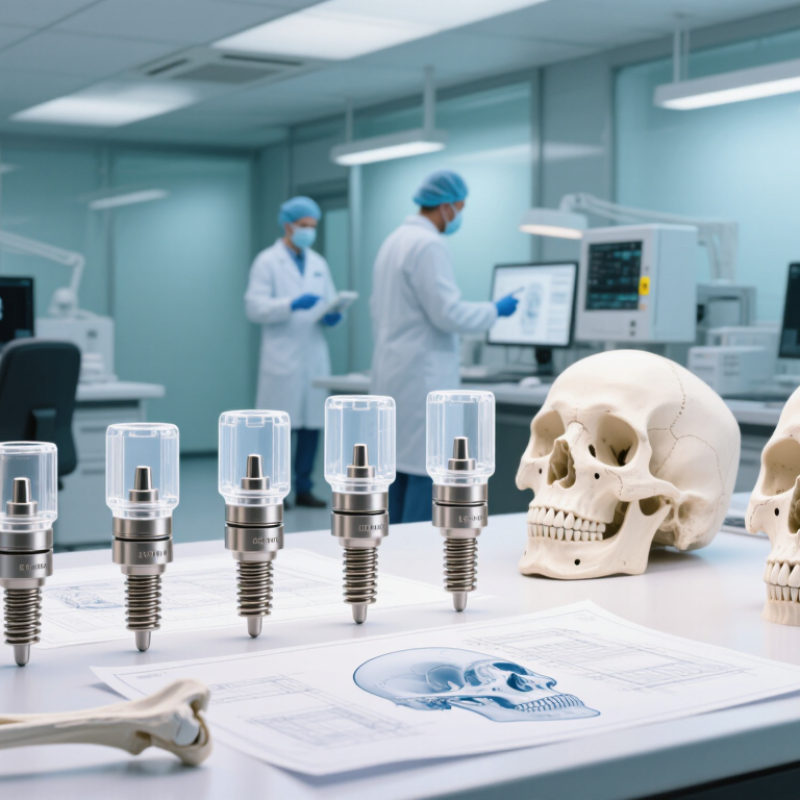
Craniofacial implants are medical devices used to restore or support parts of the skull and face. They may be considered after trauma, tumor removal, or when a person has a congenital difference. Unlike dental implants, they are designed for facial or cranial reconstruction. Their shape and placement depend on the specific area being treated and the patient’s anatomy.
Care teams may use CT scans to assess bone structure and plan an implant’s fit. Materials can include titanium or medical-grade polymers, selected according to the clinical need. Some implants restore a contour, such as the curve of the forehead; others help reconstruct an area where bone is missing. The right choice requires assessment by qualified specialists. Healing, infection risk, and the possibility of further surgery should be discussed beforehand. Results vary. Imaging helps, but it cannot predict every outcome. That part deserves honest attention.
Tips: Ask how the implant will be fixed, what follow-up is needed, and which symptoms require prompt medical advice. Bring relevant imaging and medical history to consultations. A small detail matters: confirm that the proposed plan addresses both function and appearance, not just the scan.
Craniofacial implants are used to reconstruct or restore parts of the skull and face, including the orbit and facial contours. Material choice depends on the clinical need, implant design, and patient factors. The chart shows approximate reported elastic-modulus ranges; values vary by material grade and testing method and are not a clinical selection guide.
Craniofacial implants vary in shape, material, and purpose. Standard plates and mesh are commonly made from titanium, valued for strength and imaging compatibility. Surgeons may use them to support or reconstruct areas of the skull and facial skeleton. Patient-specific implants can be designed from medical imaging when anatomy is complex. Fit matters.
Porous polyethylene is used in selected orbital and midface reconstructions. Its porous structure can encourage tissue integration, though placement and case suitability require clinical judgment. PEEK is another option for cranial reconstruction; it can be shaped precisely, but its performance depends on design, fixation, and patient factors. No material is perfect. Cost alone tells little.
Global buyers should compare more than a product catalogue. Ask suppliers for material specifications, dimensional tolerances, sterilization details, and clear traceability records. Confirm that packaging protects delicate edges during transport, and that technical files match the implant configuration. A small mismatch can complicate planning. Communication also matters: imaging requirements, lead times, and revision procedures should be explained plainly. These details do not replace a clinician’s assessment, but they help teams evaluate whether an implant is appropriate for a specific application.
Top Craniofacial Implant Suppliers for Global Buyers
How to Evaluate Craniofacial Implant Suppliers
Choosing a craniofacial implant supplier takes more than comparing prices or delivery estimates. Review its quality-management documentation, manufacturing controls, and records for the materials used. Ask how each implant is identified and traced from production through delivery. Traceability matters. For patient-specific implants, check how imaging data, design revisions, and final approvals are documented. Confirm that product and sterilization information is clear and consistent. Documentation can look complete while leaving practical questions unanswered, so request specific examples where appropriate.
Clinical and technical support deserve equal attention. Ask who responds to design questions, how changes are handled, and what information accompanies an implant. Check whether the supplier can provide compatible planning files and clear instructions for handling and storage. Good support helps. Confirm that documentation meets the requirements of the intended market, since expectations can differ between regions. Compare realistic production timelines, communication practices, and processes for addressing defects or delivery issues. A polished presentation is not proof of dependable service. No checklist catches everything; a careful review may still reveal gaps worth discussing with the clinical and procurement teams.
| Evaluation dimension | What buyers should assess | Evidence to request | Why it matters |
|---|---|---|---|
| Regulatory status | Confirm the device’s intended use, classification, and market authorization or registration for each destination country. Check that the specific model and configuration are covered. | Current market-specific certificates, registration details, labeling, and instructions for use; verify documents with the relevant authority where possible. | Requirements differ by market and device. A certificate for one country does not automatically authorize sales in another. |
| Quality management | Assess whether the supplier maintains a medical-device quality system appropriate to its role, with controlled design, production, corrective actions, and supplier oversight. | Current quality-system certificate and scope, audit information, nonconformance process, and change-control procedure. ISO 13485 certification may be relevant; confirm its scope and validity. | A documented system supports consistent manufacturing and controlled changes, but certification alone does not establish product suitability. |
| Materials and biological safety | Identify the exact material, grade, coatings, and patient-contact characteristics. Confirm that biological safety was evaluated for the device’s intended use and duration of contact. | Material specifications, certificates of analysis where applicable, and the biological evaluation or supporting test documentation. Ask how ISO 10993 principles were applied, where relevant. | Material suitability depends on the finished device, contact conditions, processing, and intended clinical use. |
| Design and clinical fit | Compare available implant types, anatomical applications, sizing options, fixation methods, and any patient-specific design workflow with the clinical team’s requirements. | Product specifications, surgical planning guidance, design-validation summaries, and documented clinical or performance evidence relevant to the intended use. | The appropriate design depends on the defect, anatomy, surgical plan, and clinician judgment; product range alone is not proof of clinical suitability. |
| Manufacturing and traceability | Review manufacturing controls, inspection criteria, lot or serial identification, and the ability to trace supplied devices to production and release records. | Process overview, inspection and release procedures, sample traceability records, and the supplier’s process for handling defects and recalls. | Traceability and documented controls help support investigations, corrective action, and field-safety response. |
| Sterilization and packaging | Establish whether the product is supplied sterile or non-sterile. For sterile products, assess the validated sterilization process, packaging integrity, and labeled shelf life. | Sterilization validation and routine-control information, packaging validation, sterility labeling, and shelf-life support. Standards such as ISO 11135, ISO 11137, or ISO 17665 may apply depending on the method. | Applicable requirements depend on the sterilization method and device. Do not assume every standard or method applies to every product. |
| Supply reliability | Evaluate lead-time communication, order accuracy, inventory planning, continuity arrangements, and the supplier’s ability to notify buyers of delays or product changes. | Written lead-time estimates, order and back-order procedures, escalation contacts, business-continuity information, and change-notification terms. | Predictable supply and prompt communication are important for procurement planning and scheduled care. |
| Technical and after-sales support | Check access to product documentation, trained technical contacts, complaint handling, and support for product questions in the buyer’s operating region. | Support-channel details, response and escalation procedures, training materials, complaint-management process, and local-language documentation where required. | Accessible support helps resolve product and documentation questions and enables timely reporting of concerns. |
Note: Use this framework for supplier screening, then confirm device-specific requirements with qualified regulatory, quality, and clinical professionals in each target market.
Craniofacial implant suppliers differ in materials, customization, and manufacturing depth. Strong candidates can turn a surgeon-approved CT-based design into a precise implant, while documenting material origin, dimensions, and production controls. Common options include titanium, PEEK, and medical-grade polymers; suitability depends on the defect, imaging quality, and clinical plan. Ask whether the supplier supports patient-specific design reviews, revision cycles, and fit checks against physical or digital models. Small details matter. A millimeter-level mismatch can complicate placement.
Manufacturing capability is only part of the picture. Buyers should compare validated sterilization options, packaging integrity, traceability, and technical support across time zones. Grand View Research estimated the global 3D-printed medical devices market at about US$2.7 billion in 2023, with projected growth through 2030. This broader market figure is not specific to craniofacial implants, but it reflects expanding use of additive manufacturing in medical devices. Ask suppliers for product-specific evidence, not just market claims: dimensional inspection records, material specifications, and relevant testing summaries. Digital workflows can improve customization, yet they do not replace clinical judgment. Supplier comparisons can be imperfect; regional delivery and after-sales support deserve as much scrutiny as design software.
Global sourcing of craniofacial implants depends on more than price and delivery speed. Buyers should verify device-specific documentation, material traceability, sterilization records, and clear instructions for use. Requirements differ by destination market: a supplier’s quality-system certificate does not, by itself, authorize every product for sale. Ask for evidence relevant to the exact implant and intended market, then check it against local regulatory requirements.
The ISO Survey 2022 reported more than 30,000 ISO 13485 certificates worldwide. That scale offers useful context, but certification alone cannot confirm a particular implant’s safety or performance. Request current certificates and audit scope, and review how the supplier manages design changes, nonconformities, and post-market feedback.
Small details matter. Can they trace a lot number to its material records? Will they provide updated technical files when requirements change? These questions can expose gaps before procurement.
Supplier support matters after shipment, too. Confirm response times for technical questions, complaint handling, and replacement documentation. For custom-fitted implants, clarify how imaging files, design approvals, and production tolerances are reviewed and stored. Keep communication records; verbal assurances are easy to misremember.
One caution: buyers may overvalue polished compliance documents and under-test the practical support behind them. A short, documented assessment with regulatory and clinical stakeholders can reveal whether that support works in real cases.
Review quality-management documents, manufacturing controls, material records, and traceability procedures. Ask for examples.
Ask whether each lot number links to material records and production details. Confirm that identification continues through delivery.
Check how imaging files, design revisions, approvals, and production tolerances are recorded. Confirm that final instructions are clear.
No. A certificate alone does not confirm a specific implant’s safety, performance, or market authorization.
Request evidence for the exact implant and destination market. Compare it with local requirements alongside regulatory and clinical teams.
Confirm response times for technical questions, complaint handling, and replacement documents. Keep communication records.
Review sterilization information, storage instructions, planning-file compatibility, production timelines, and defect-handling processes. Small details matter.
No. A careful review may still miss gaps, so discuss concerns with clinical and procurement teams.
Craniofacial Implants are medical devices used to support reconstruction and repair of the skull and facial structures after injury, surgery, or congenital conditions. They may be designed for areas such as the cheek, jaw, orbit, or cranium, and are commonly made from biocompatible materials such as titanium or medical-grade polymers. Implant design, size, and fixation options vary according to the clinical need and the patient’s anatomy.
When comparing suppliers, buyers should assess product range, material and manufacturing quality, customization options, documentation, and the availability of technical support. For international sourcing, it is also important to confirm that products meet the regulatory requirements of the intended market and that the supplier can provide clear information on quality systems, packaging, shipping, and after-sales service. Careful evaluation helps healthcare organizations identify dependable supply partners while supporting safe, consistent clinical use.

Moventra Medical