Compression Screws play a critical role in orthopedic fixation, especially when stable bone compression is required. Their performance depends on thread geometry, core diameter, material strength, and insertion accuracy. A reliable supplier must offer more than attractive pricing. Details matter.
This guide examines the Top 10 Compression Screws Suppliers Worldwide through practical and technical criteria. These include product range, manufacturing experience, quality control, sterilization options, documentation, and distribution capability. We also consider whether suppliers support surgeons, hospitals, and medical-device manufacturers with clear technical information. Evidence matters more. Current certificates, product specifications, and traceability records should always be verified directly with each company.
The selected suppliers represent different strengths. Some focus on trauma systems and cannulated screw designs. Others provide specialized solutions for foot, ankle, spinal, or reconstructive procedures. Materials such as titanium and stainless steel may suit different clinical requirements. However, no supplier is ideal for every application. That is worth admitting.
Market reputation can be useful, but it should not replace independent evaluation. Buyers should review regulatory status in their target markets, delivery reliability, training resources, and post-sales support. Product availability may also change with regional demand or updated standards. This article offers a structured starting point, not a substitute for clinical judgment or formal procurement review. Practical testing remains valuable. A screw that looks precise in a catalogue must still perform consistently in real surgical workflows.
Compression Screws: Definition, Design, and Medical Applications
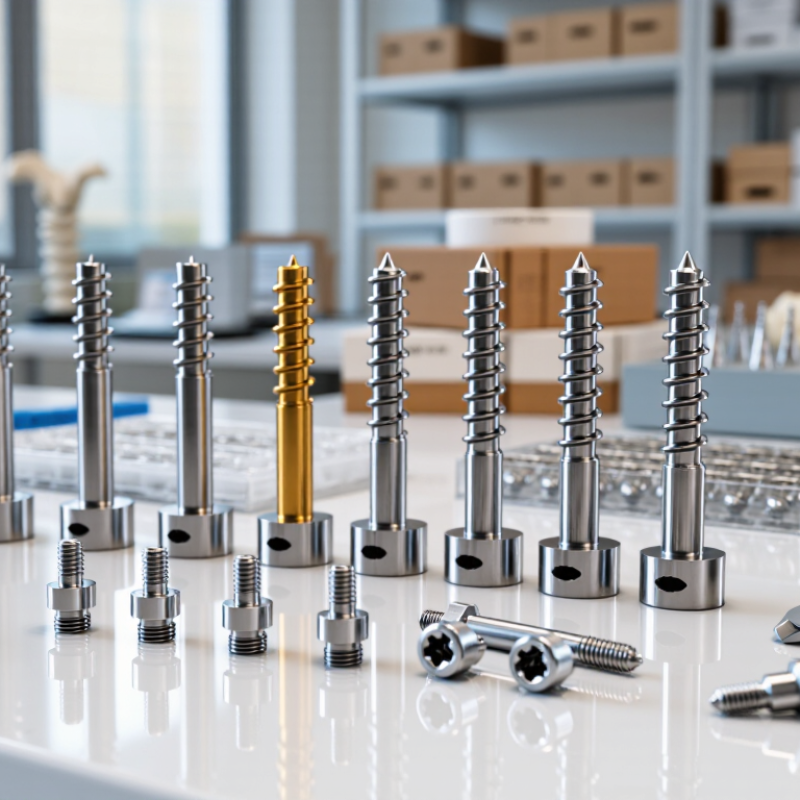
Compression screws are orthopedic fixation devices designed to draw two bone fragments together. Their threads usually engage the far fragment, while the near hole allows controlled sliding. Tightening then creates axial compression across the fracture line. This pressure can improve stability and support healing when the bone surfaces are properly aligned.
Design details matter. Thread pitch, core diameter, head shape, and material affect purchase, strength, and insertion torque. A partially threaded screw can generate interfragmentary compression, while a fully threaded option may provide positional fixation. Some designs use a countersunk head to reduce prominence near the bone surface. Small differences matter.
In medical applications, surgeons may use compression screws for selected fractures in the hand, foot, ankle, and other skeletal areas. The choice depends on fracture pattern, bone quality, soft-tissue condition, and imaging findings. During placement, a lag technique may require accurate drilling, depth measurement, and protection of nearby structures. A screw that appears secure can still fail if the far cortex is missed or compression is excessive. No design is perfect. Clinical judgment remains essential.
From a supplier’s perspective, dependable production requires traceable materials, dimensional inspection, clean packaging, and validated sterilization processes. Technical files should clearly state intended use, testing methods, and limitations. I would also examine insertion instruments, documentation, and complaint history rather than relying on catalog claims alone. Availability is useful, but predictable quality matters more.
Key Criteria for Evaluating Global Compression Screw Suppliers
Choosing among the top 10 compression screw suppliers worldwide requires more than comparing prices. A reliable evaluation begins with technical evidence. Check dimensional drawings, thread profiles, tensile data, and allowable load ranges. Ask whether material certificates match the supplied batch. For implant-grade products, review biocompatibility records, sterilization guidance, and documented quality controls. Ask for evidence.
Traceability separates a dependable supplier from a polished website. Each shipment should connect to a lot number, inspection report, and production record. Suppliers should explain their measurement equipment and calibration intervals. Samples reveal more. Test screw insertion, thread engagement, head seating, and resistance under repeated loading. A small variation can affect assembly performance. This is where practical sourcing experience matters most.
Communication and delivery discipline also deserve careful review. Compare sample lead times, minimum order quantities, packaging methods, and responses to technical questions. A strong supplier identifies risks before production, rather than hiding them behind confident language. Request corrective-action records when defects occur, but protect sensitive information during audits. No checklist is perfect. A supplier may meet every document requirement yet struggle with a sudden volume increase. Review capacity, backup processes, and change-notification procedures. Regional support can reduce delays, although local availability does not always mean better engineering. Reassess performance after the first three deliveries, using defect rates, response times, and consistency instead of promises.
Top 10 Compression Screw Suppliers Worldwide
The Top 10 Compression Screw Suppliers Worldwide are often assessed by more than product availability. Experienced buyers examine material quality, thread accuracy, sterile packaging, and production consistency. Common materials include titanium alloys and surgical stainless steel. Each option should match the intended anatomical and mechanical requirements.
Reliable suppliers provide detailed drawings, dimensional tolerances, inspection records, and traceability documents. Quality systems aligned with recognized medical-device standards are essential. Batch testing can reveal surface defects, thread damage, or inconsistent head geometry. Small errors matter. A poorly finished screw may complicate insertion or affect compression.
Supplier evaluation should also include technical support, sampling procedures, delivery stability, and change-control practices. Communication is often overlooked, especially across time zones. Ask how the supplier handles nonconforming products and urgent documentation requests. A lower price may hide longer validation work or unpredictable lead times. My own assessment would not rely on catalog claims alone. Factory audits, sample measurements, and independent verification offer stronger evidence. Even then, no supplier is perfect, and requirements can change during development. Careful comparison remains necessary when selecting among the Top 10 Compression Screw Suppliers Worldwide.
Product Range, Manufacturing Standards, and Technical Capabilities
Top 10 Compression Screws Suppliers Worldwide
A reliable top-ten supplier shortlist should examine product range, not catalog size alone. Compression screws may include headless, cannulated, partially threaded, and fully threaded designs. Diameters, lengths, thread pitches, and driver interfaces must match surgical needs. The WHO Global Atlas of Medical Devices reports more than two million medical device types worldwide. This scale makes disciplined classification essential.
Manufacturing standards reveal technical maturity. Suppliers should demonstrate ISO 13485 quality systems, validated machining, controlled cleaning, and batch-level traceability. ASTM F543 testing can assess metallic bone screw torsion, insertion torque, and pullout performance. Material certificates should identify titanium or stainless-steel grades clearly. Surface treatment records matter. A polished finish alone proves little.
Look for evidence from real production experience. Ask for dimensional inspection reports, fatigue testing, sterilization compatibility, and nonconformance records. A capable factory can explain how it controls cannulation, thread accuracy, and burr formation under magnification. MarketsandMarkets’ orthopedic devices analysis continues to forecast steady sector growth through 2029, increasing pressure on capacity and quality consistency. Yet forecasts do not verify a supplier. I would still question unusually short lead times. They may indicate efficient planning, or incomplete validation. Surgeon feedback, audit findings, and complaint-response data deserve equal weight. Documentation should be readable, current, and specific. Vague claims remain a warning sign.
How to Select the Right Compression Screw Supplier for Your Needs
Choosing a compression screw supplier starts with application details, not a polished catalog. Define load, thread size, material, surface treatment, temperature, and installation torque. Ask whether the supplier can produce a controlled sample for your actual assembly. A screw that fits a drawing may still bind under load. Test it.
During supplier reviews, inspect quality evidence closely. Request material certificates, dimensional inspection reports, lot traceability, and process-control records. For regulated or safety-critical applications, confirm an appropriate quality system, such as ISO 13485 or ISO 9001, according to your product category. Check how they manage nonconforming parts. Their answer often reveals more than a sales presentation. Also review production capacity, lead times, packaging, and change-notification procedures. Worldwide sourcing adds freight delays, language gaps, and customs risks. Clarify these responsibilities in writing.
Do not choose on unit price alone. Compare total cost, including tooling, inspection, testing, expedited shipping, and rejected parts. Speak with an engineer, not only a salesperson. Ask for references from similar applications, but verify the evidence independently. A factory may promise tight tolerances yet avoid showing measurement data. That is a warning. Still, no supplier is flawless. Your own specification may be incomplete, or your test fixture may distort results. Run a pilot lot, record failures, and revisit the decision after real installation feedback. Small details matter.
Top 10 Compression Screw Suppliers Worldwide: How to Select the Right Supplier
The chart presents a practical procurement weighting model for evaluating compression screw suppliers. Product quality and regulatory compliance are prioritized, followed by material traceability, dimensional consistency, customization capability, delivery reliability, and total cost. The weighting is intended as a neutral comparison framework and does not represent any specific company or brand.
FAQS
It is an orthopedic fixation device. Tightening draws two bone fragments together and creates pressure across the fracture.
Threads usually grip the far fragment. The near hole permits controlled sliding during tightening. Proper alignment remains essential.
Thread pitch, core diameter, head shape, and material affect strength and insertion torque. Small differences matter.
A partially threaded screw can create interfragmentary compression. A fully threaded screw may provide positional fixation without pulling fragments together.
Selected fractures of the hand, foot, ankle, and other skeletal areas may require them. The fracture pattern guides the choice.
Accurate drilling and depth measurement are important. Nearby structures need protection. Missing the far cortex can cause failure.
Request material certificates, inspection reports, lot traceability, and process-control records. Review packaging and sterilization evidence.
Not necessarily. Include tooling, testing, rejected parts, inspection, and shipping. Cheap parts can become expensive later.
Request controlled samples for the actual assembly. Run a pilot lot and record failures. Test it.
Delayed freight, unclear communication, and weak change notices can disrupt production. Your own specification may also be incomplete. No design is perfect.
Conclusion
This article provides a practical overview of Compression Screws, explaining their definition, structural design, fixation principles, and important medical applications. It examines how screw geometry, thread configuration, material selection, surface treatment, and compression performance contribute to secure and reliable orthopedic procedures. The discussion also highlights the importance of evaluating suppliers according to product quality, manufacturing consistency, regulatory compliance, testing procedures, and technical support.
The article presents a worldwide comparison of ten leading categories of Compression Screws suppliers without focusing on individual brand names. It reviews their product ranges, customization capabilities, production standards, quality-control systems, and ability to support different clinical and surgical requirements. Finally, it offers guidance for selecting a suitable supplier by considering application needs, material compatibility, documentation, delivery capacity, communication, and long-term cooperation. This overview is designed to help medical professionals, distributors, and procurement teams make informed, responsible, and quality-focused sourcing decisions.

 Moventra Medical