Choosing a manufacturer for Titanium Mesh For Cranial Repair involves more than comparing product photos or prices. Surgeons and procurement teams may examine mesh geometry, thickness options, handling characteristics, documentation, and the consistency of manufacturing processes. Small details matter. A cleanly finished edge, for example, can affect how a component is handled during a procedure.
This guide introduces ten manufacturers associated with cranial repair mesh and outlines practical points for comparing them. It considers product range, technical information, quality systems, customization capabilities, and the clarity of customer support. These factors can help readers build a useful shortlist, but they do not replace clinical judgment or independent verification. Product availability and specifications can vary by market and over time.
Look closely at the evidence. Ask whether dimensions, material details, and traceability information are clearly documented. Check how each company describes its production controls, and confirm that claims match the intended use and local requirements. A polished brochure is not enough. Even a detailed product page may leave questions unanswered.
No ranking can capture every clinical reality. A manufacturer that suits one hospital may not suit another, given differences in surgical workflow, inventory needs, and approved products. The comparison should therefore be treated as a starting point, not a final endorsement. Some details will remain uncertain until verified directly. That is worth acknowledging. This overview aims to support careful research with concrete comparison points, while keeping patient safety, transparent sourcing, and responsible evaluation central.
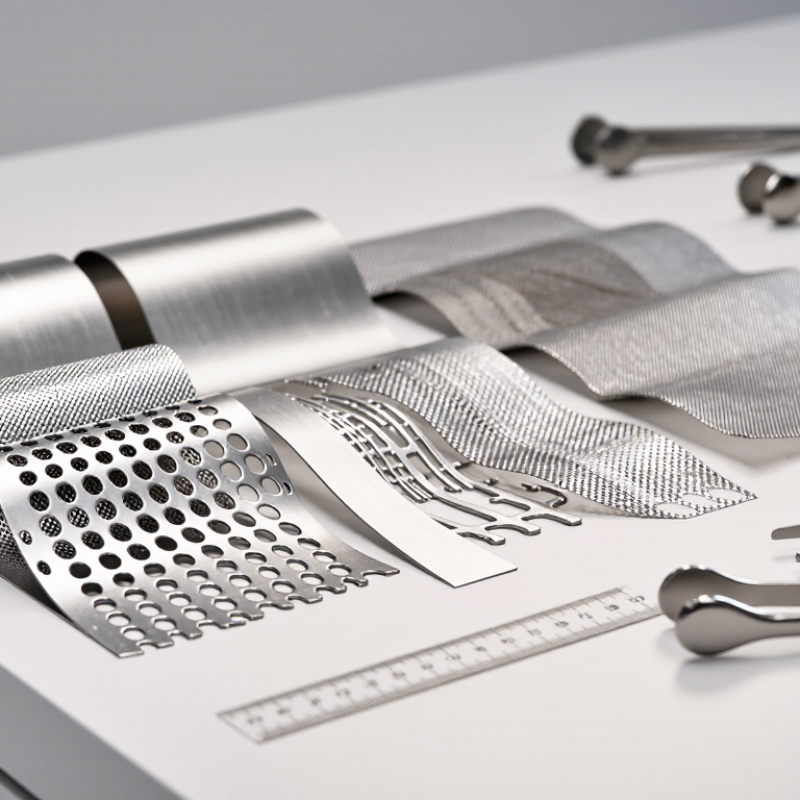
Titanium mesh is a perforated implant used to cover selected skull defects. Surgeons shape it to match the patient’s anatomy, often using imaging and measurements from the defect. Its openings allow visibility of underlying tissue, but mesh is not a substitute for living bone. The exact design depends on location, defect size, soft-tissue condition, and clinical judgment.
Material properties help explain its use. ASM International’s Titanium: A Technical Guide reports titanium density at about 4.51 g/cm³ and elastic modulus around 105–120 GPa, depending on grade. These figures describe the material, not the outcome for any individual patient. Mesh thickness, hole pattern, edge finish, fixation, and contour all matter. Fit matters. A small mismatch may create a palpable edge or leave coverage less even. That trade-off deserves attention.
Tips: Ask how the mesh will be contoured and fixed, and how follow-up imaging may be affected. Confirm the implant’s material documentation and intended use with the surgical team. A neat-looking scan is reassuring, but it cannot answer every question about healing. One limitation remains: published clinical results vary, so material data alone cannot predict success.
Choosing a titanium mesh manufacturer for cranial repair takes more than comparing prices or catalog images. Ask for material traceability, documented quality controls, and clear specifications for thickness, pore geometry, and edge finishing. Small details matter. A rough edge or inconsistent contour may complicate handling and fit. Request examples of how the manufacturer checks dimensional accuracy, especially for patient-specific designs.
Evidence should be specific and reviewable. Look for validated manufacturing and cleaning processes, sterilization compatibility information, and technical documents that match the supplied product. Ask how design files are reviewed, how changes are recorded, and what support is available if a fit concern arises. A polished brochure is not proof. Clear answers and consistent records are more useful. Also consider whether the manufacturer can explain material properties without making broad clinical promises.
Communication deserves attention too. Can the technical team discuss imaging inputs, design tolerances, and delivery timelines in plain language? Ask how defects or delays are handled. These questions may feel repetitive, but they reveal gaps. No checklist removes uncertainty, and a neat datasheet can still leave practical questions unanswered. Compare manufacturers on verifiable processes, responsive support, and the quality of the information they are willing to share.
Cranial titanium mesh begins with a defect map, not a flat sheet. Engineers translate CT-derived anatomy into a digital contour. They check fixation zones, edge clearance, and screw-hole placement with the surgical team. Small changes matter: a sharp edge or poorly placed hole can complicate handling. Fit varies.
Material choice shapes the design. ASM International’s titanium-alloy reference data place Ti-6Al-4V ELI density near 4.43 g/cm³ and elastic modulus around 110 GPa. These values help engineers balance strength and weight, but they do not predict performance on their own.
Mesh thickness, opening size, and support pattern also affect stiffness and contourability. The ASTM F136 specification defines requirements for wrought Ti-6Al-4V ELI material; it does not replace device-specific design verification.
Manufacturing may involve laser cutting or additive production, followed by contouring, deburring, cleaning, and inspection. The FDA’s 2017 guidance on additive medical devices highlights material characterization, process validation, and post-processing controls. Manufacturers should inspect hole dimensions, surface defects, and fit against the planned anatomy. A smooth finish matters where tissue contacts the mesh.
One limitation deserves attention: even a precise scan cannot capture every adjustment made during surgery.
Titanium mesh supports cranial reconstruction when a defect needs stable coverage and the surgeon needs to shape the implant to the patient’s anatomy. It may be used after trauma, tumor removal, or congenital defects. Preoperative imaging helps teams assess contour, fixation points, and nearby structures. Fit matters. A poorly contoured edge can irritate soft tissue or leave an uneven profile, even when the material itself meets specification.
Manufacturers should document material identity, dimensional tolerances, surface finish, and production traceability. Pores and edges need consistent inspection; burrs can complicate handling and tissue contact. Sterilization validation and packaging integrity also matter. ISO 13485 addresses medical-device quality management, while biological evaluation should follow applicable ISO 10993 guidance for the device’s intended contact. Material specifications and regulatory requirements vary by product and market, so purchasers should verify current documentation rather than rely on a generic certificate. Real cases are rarely textbook. Imaging compatibility, screw selection, and the patient’s soft-tissue condition can change what “good fit” means, and quality checks cannot replace clinical judgment.
| No. | Generic Manufacturer Capability Profile | Typical Clinical Application | Product and Design Considerations | Relevant Standards and Quality Evidence |
|---|---|---|---|---|
| 1 | Standard surgical-grade titanium mesh supplier | General reconstruction of cranial defects where a surgeon-selected mesh can be shaped during the procedure. | Confirm alloy, thickness, pore pattern, edge finish, forming characteristics, and compatibility with the intended fixation system. Product dimensions and indications should follow the device labeling. | Material specifications may include ASTM F67 or ISO 5832-2 for commercially pure titanium, or ASTM F136 / ISO 5832-3 for applicable titanium alloy products. Review lot traceability and material certificates. |
| 2 | Low-profile mesh and fixation system supplier | Cases where a low-profile reconstruction and compatible fixation components are required. | Assess mesh contourability, screw-hole geometry, fixation compatibility, burr or edge control, and whether the complete system is intended to be used together. | Request validated design specifications, dimensional inspection records, manufacturing controls, and instructions for use. Verify that any claimed compatibility is supported by the device documentation. |
| 3 | Patient-specific implant manufacturer | Selected complex or irregular defects for which a patient-matched implant is planned. | Evaluate imaging and segmentation requirements, design approval workflow, fit verification, production lead time, and contingency planning. Patient-specific devices require case-specific review. | Review the applicable regulatory pathway, design and production records, risk management documentation, and validated manufacturing processes. ISO 14971 is a risk-management standard; applicable requirements vary by jurisdiction and device type. |
| 4 | Large-defect reconstruction supplier | Reconstruction of larger cranial defects when a mesh-based approach is clinically selected. | Consider coverage, rigidity, contour retention, fixation points, edge protection, and the surgeon’s plan for soft-tissue coverage. Suitability depends on the patient, defect, and device instructions. | Check design verification, mechanical test rationale, process validation, and traceability. Do not treat a general material standard as proof that a specific implant is suitable for every defect size. |
| 5 | Craniofacial and orbital mesh supplier | Selected craniofacial or orbital reconstructions where a titanium mesh product is indicated. | Review anatomical fit, contouring requirements, edge finishing, fixation options, and any product-specific restrictions. Orbital use requires attention to the intended anatomy and the device’s labeled indications. | Confirm the intended-use statement, applicable regulatory authorization, packaging integrity, and validated cleaning or sterilization information supplied by the manufacturer. |
| 6 | Pre-contoured mesh supplier | Cases where a pre-shaped implant may reduce intraoperative contouring. | Confirm available shapes and sizes, anatomical reference, permitted intraoperative modification, and fixation method. A pre-contoured design does not guarantee an individual patient fit. | Review design-control documentation, dimensional acceptance criteria, inspection records, and clear instructions for selection and any permitted modification. |
| 7 | Custom-cut or digitally planned mesh supplier | Selected cases in which a planned outline or implant geometry is preferred. | Assess the planning workflow, data transfer controls, approval steps, manufacturing tolerances, and how the final design is checked against the approved plan. | Request documented software and production validation where applicable, design review records, traceability, and change-control procedures for the order-specific device. |
| 8 | Revision and replacement implant supplier | Selected revision procedures requiring replacement or additional reconstruction after clinical assessment. | Review implant selection in the context of existing hardware, defect geometry, prior surgery, and the planned fixation strategy. Compatibility with previously implanted devices must not be assumed. | Check labeling, material identification, lot traceability, and documentation addressing known interactions or compatibility limitations. Clinical decisions remain with the treating team. |
| 9 | Sterile, procedure-ready mesh supplier | Procedures requiring a packaged implant supplied sterile for use as labeled. | Verify sterile status, package configuration, shelf life, storage conditions, and the single-use or reuse instructions. Inspect the package and implant before use. | Review sterilization method and validation information, sterile-barrier packaging validation, expiry dating, and lot identification. Follow the product labeling and facility procedures. |
| 10 | Quality-system-focused implant supplier | Procurement programs prioritizing consistent manufacturing controls and documented post-market processes. | Evaluate supplier qualification, complaint handling, change notification, corrective actions, traceability, and responsiveness to product-quality concerns. | ISO 13485 addresses quality management systems for medical devices; ISO 14971 addresses medical-device risk management. Also verify applicable local regulatory authorization and current regulatory requirements. |
Interpretation: The profiles above are generic capability categories, not identified companies, a verified market ranking, or product endorsements. Standards are relevant examples rather than a complete compliance checklist; applicability depends on the device, intended use, and market. Clinical selection, shaping, fixation, and follow-up should follow the treating clinician’s judgment and the specific device instructions for use.
A comparison of ten titanium mesh manufacturers for cranial repair is most useful when it examines capabilities, not slogans. Some profiles focus on thin, preformed sheets for shaping during surgery; others emphasize custom contours based on patient imaging. Additional strengths may include precise laser cutting, consistent pore geometry, smooth edge finishing, reliable material traceability, or flexible production of standard sizes. The remaining profiles can be assessed for documented quality controls, clear technical files, responsive engineering support, and practical packaging details. These are different strengths, not proof that one supplier suits every case.
Look closely at how each manufacturer describes its mesh dimensions, thickness tolerances, forming limits, and inspection process. Ask whether design files and material records can be reviewed, and how changes are controlled between production batches. A polished brochure is not enough. Evidence matters. The ten profiles should distinguish verified information from claims that still need confirmation. No profile is perfect; comparisons can also overlook the needs of a particular surgical team or facility.
Tips: Request current specifications and traceability documents. Confirm that the product is intended for the stated clinical use. Compare edge quality and handling guidance, not just price. Small details matter.
It covers selected skull defects. Its openings let clinicians see underlying tissue, but it does not replace living bone.
Imaging helps create a defect map and digital contour. Surgeons and engineers consider edge clearance, screw-hole placement, and fixation zones. Small mismatches can matter.
Thickness, opening size, support pattern, and contour all play a role. Titanium density and stiffness describe the material, not an individual patient’s outcome.
Production may use laser cutting or additive methods. The mesh may then be contoured, deburred, cleaned, and inspected for defects and fit. Details vary.
A rough or sharp edge can complicate handling or irritate nearby tissue. Smooth finishing matters where tissue contacts the mesh.
Imaging helps guide design, but it cannot capture every change made during surgery. A tidy scan is reassuring, not a complete answer about healing.
Review dimensions, thickness tolerances, forming limits, inspection steps, material records, and traceability documents. A polished brochure is not enough.
Ask how the mesh will be shaped and fixed, and whether it may affect follow-up imaging. Confirm its intended use and material documentation. There may still be uncertainties.
This article offers a practical overview of Titanium Mesh For Cranial Repair, explaining how its lightweight structure and adaptable form can support cranial reconstruction. It outlines key factors for evaluating manufacturers, including material consistency, design flexibility, manufacturing controls, documentation, and the ability to meet clinical needs. Readers will also learn how mesh design and production processes can influence fit, strength, and suitability for different repair scenarios.
The article further discusses clinical applications, relevant standards, and quality considerations that healthcare professionals and procurement teams may wish to assess. Its profiles of ten manufacturers provide a structured way to compare capabilities and product approaches without focusing on brand promotion. Together, these topics help readers build a clearer understanding of the field and make more informed comparisons when researching cranial mesh options.
Moventra Medical