Selecting the right Self Tapping Bone Screws requires more than comparing prices, thread profiles, or catalogue photographs. Global buyers must evaluate clinical suitability, material traceability, manufacturing consistency, and supplier evidence. The World Health Organization reports that musculoskeletal conditions affect approximately 1.71 billion people worldwide, creating sustained demand for reliable orthopedic fixation products. Yet demand alone does not prove quality.
This guide examines leading Self Tapping Bone Screws through practical procurement criteria. These include titanium or stainless-steel composition, thread geometry, tip performance, drive compatibility, sterilization controls, and documented mechanical testing. The U.S. FDA classifies many orthopedic bone screws under 21 CFR 888.3040, while ISO 5832 standards address metallic materials used in surgical implants. Buyers should also review ISO 13485 certification, technical files, lot records, and post-market surveillance evidence. Certificates are useful. They are not enough.
Market research from Grand View Research and Fortune Business Insights indicates continued growth in orthopedic devices, supported by aging populations, trauma care, and expanding surgical access. However, market forecasts can differ because companies use different product categories and regional assumptions. That limitation deserves attention. A dependable supplier should provide clear drawings, dimensional tolerances, coating information, packaging details, and test reports from qualified laboratories. Surgeons may notice a smooth insertion, a stable driver fit, or a damaged thread immediately. Procurement teams may notice those details later, when replacement costs rise. This overview therefore focuses on evidence, application fit, and supplier transparency rather than promotional rankings.
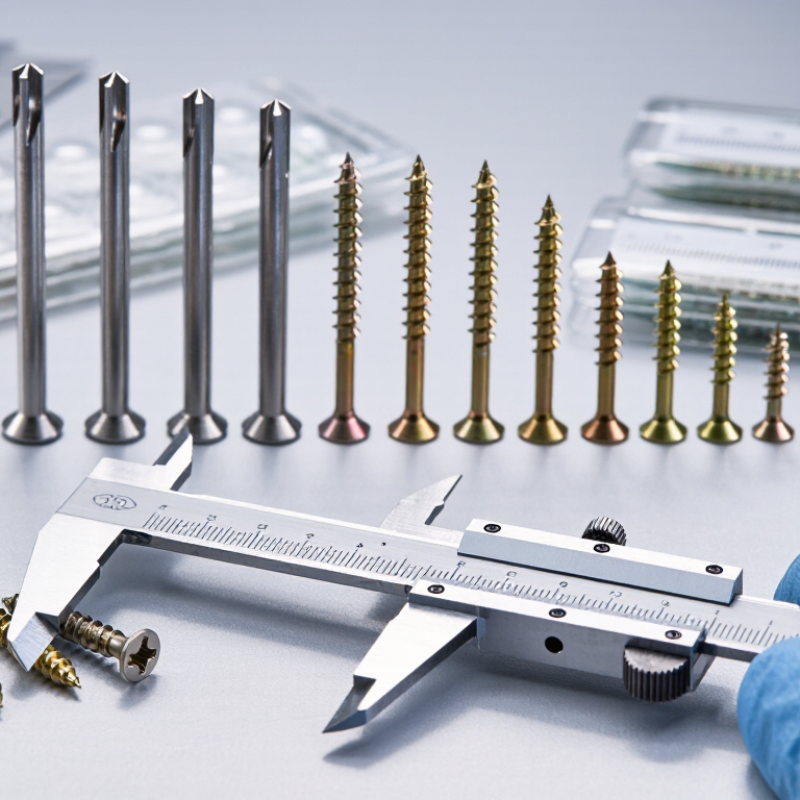
Self-tapping bone screws combine cutting action with fixation, but their performance depends on small design details. Grand View Research’s 2024 Orthopedic Implants Market Report valued the global market at about USD 49.8 billion in 2023, with projected growth near 4.9% annually through 2030. That growth increases buyer interest, yet market size does not prove screw quality.
Thread flutes act like miniature channels. They collect and release bone chips during insertion, reducing clogging around the thread path. Tip geometry matters too. Sharp cutting edges can lower insertion resistance, while an unsuitable point angle may increase heat or damage fragile bone. A 2023 review in the Journal of Orthopaedic Surgery and Research noted that insertion torque and pull-out strength vary with thread profile, pilot-hole preparation, and bone density. The lesson is uncomfortable: one “universal” design rarely fits every anatomy.
Tips: Check the technical file, not only the catalogue image. ISO 5835 provides dimensional guidance for certain metallic bone screws, but it does not prove clinical performance or validate every self-tapping feature. Ask for material certificates, dimensional inspection results, sterilization details, and mechanical test methods. ASTM F543 testing can help compare torque and driving behavior. Fit matters. Do not guess. In practice, surgeons may still adjust technique when dense cortical bone, weak cancellous bone, or unexpected flute blockage appears.
| Screw Category | Typical Nominal Diameter | Typical Length Range | Thread Profile | Thread Flutes | Tip Geometry | Common Application | Relevant Material or Design Standard |
|---|---|---|---|---|---|---|---|
| Miniature cortical self-tapping screw | 1.5–2.0 mm | 4–16 mm | Fine, closely spaced cortical thread | Usually 2 cutting flutes | Tapered, pointed self-tapping tip | Small-fragment fixation and hand or foot surgery | Implant-grade stainless steel or titanium alloy; dimensions depend on the applicable device specification |
| Small-fragment cortical screw | 2.0–2.7 mm | 6–40 mm | Fine pitch with relatively shallow thread depth | 2 or 3 flutes | Conical tip with defined cutting edges | Maxillofacial, hand, wrist, and small-bone fixation | Commonly manufactured from implant-grade stainless steel or titanium alloy |
| Standard cortical self-tapping screw | 3.5 mm | 10–80 mm | Fine-pitch thread designed for dense cortical bone | Typically 2 cutting flutes | Sharp trocar or pyramidal point | Plate fixation of long-bone and periarticular fractures | May be designed to align with ISO 5835 requirements where the specific screw type and dimensions are applicable |
| Large-fragment cortical screw | 4.5 mm | 20–120 mm | Fine cortical thread with increased core diameter | Usually 2 flutes | Self-tapping cutting point; geometry varies by system | Large-fragment plates and load-bearing long bones | Implant-grade stainless steel or titanium alloy; verify the exact dimensional standard before procurement |
| Cancellous self-tapping screw | 4.0–6.5 mm | 20–120 mm | Coarse, deep thread for softer cancellous bone | 2 flutes or localized cutting slots | Blunt-to-tapered tip with cutting relief | Metaphyseal, epiphyseal, and osteoporotic bone fixation | Material selection commonly references ISO 5832-1 stainless steel or ISO 5832-3 titanium alloy requirements |
| Partially threaded lag screw | 2.7–7.3 mm | 20–160 mm | Threaded distal section with smooth proximal shaft | Cutting flutes located on the threaded section | Self-tapping point with a smooth-shaft transition | Interfragmentary compression when the near cortex is over-drilled or gliding | ISO 5835 may be relevant to specified implant screw configurations; confirm thread, head, and dimensional conformity |
| Cannulated self-tapping screw | 2.4–7.3 mm | 20–150 mm | Cortical or cancellous thread around a central cannulation | Usually 2 cutting flutes | Tapered self-drilling or self-tapping tip | Guidewire-assisted fixation of fractures requiring accurate trajectory control | The cannulation and tip design are system-specific; material and dimensional validation are required |
| Locking head self-tapping screw | 2.0–5.0 mm | 8–80 mm | Cortical or variable-pitch thread with a threaded or compatible head | Commonly 2 flutes | Pointed cutting tip; head geometry is plate-system dependent | Fixed-angle or locked plating applications | Compatibility must be verified between the screw head, driver, plate hole, and torque specifications |
Compare measured performance, not thread appearance. Review insertion torque, driving torque, pullout force, and torsional strength. Appearance can mislead.
Stainless steel is stiffer and denser, near 193 GPa and 8.0 g/cm³. Titanium alloy is lighter, near 110 GPa and 4.43 g/cm³. Lower stiffness may reduce stress shielding. It does not guarantee stronger fixation.
Insertion torque shows the effort needed to advance the screw. Excessive torque may damage the screw or bone. Very low torque may indicate weak thread engagement. Torque alone is not enough.
Pullout strength measures resistance against axial removal. Diameter, thread depth, pitch, core diameter, and insertion depth all affect it. Reported results should include force, bone substitute, and test location.
Not completely. Dense synthetic bone may differ from soft cancellous bone. Patient bone quality, screw angle, and surgical technique also vary. That limitation matters.
Fatigue testing shows performance under repeated loading. Ask for load range, frequency, sample count, and failure criteria. One million cycles sounds impressive. It still may not reflect every patient.
Match the design to bone type, fracture pattern, and available bone stock. Fine threads may suit dense cortical bone. Deeper or wider threads may improve grip in softer cancellous bone. These are tendencies, not fixed rules.
Request traceable test reports, material certificates, thread geometry, core diameter, sterile status, and approved instructions. Check applicable material requirements, such as ASTM F136 or ASTM F138. Do not compare strength values alone.
Choosing by diameter alone is a recurring mistake. A larger screw may improve strength but remove more bone. Length must avoid far-cortex or soft-tissue penetration. Even a suitable-looking screw can fail when preparation changes.
Self Tapping Bone Screws are designed to create their own thread during insertion, helping simplify fixation in orthopedic procedures. Their performance depends on the interaction of thread flutes, tip geometry, and screw design, with ISO 5835 providing an important dimensional and functional reference. Common material options include 316L stainless steel and Ti-6Al-4V ELI titanium, which should be assessed for strength, corrosion resistance, biocompatibility, and compliance with ASTM F543 requirements.
For reliable selection, global buyers should compare driving torque, pullout strength, fatigue resistance, and insertion behavior across different designs. Diameter, length, and thread pitch must be matched to cortical or cancellous bone conditions and the intended fixation purpose. Supplier evaluation is equally important: buyers should verify ISO 13485 quality systems, applicable CE MDR and FDA requirements, material certification, production controls, and complete traceability. A structured review of technical data and regulatory documentation supports safer sourcing and more consistent clinical performance.

 Moventra Medical